App Store Ranking Factors in 2026: The Complete…
Learn the Apple App Store ranking factors in 2026. Discover how keywords, installs, screenshots, ratings, and engagement influence your app’s search rankings.
Published Apr 17, 2026
Discover what App Store Optimization is and learn proven ASO strategies and best practices to improve rankings, increase visibility, and drive more app downloads.
15 min
App Store Optimization (ASO) means making your app easier to find in search results and getting more installs from people who see your listing. This involves improving on-metadata elements like your app’s title, keywords, description, icons, and screenshots, as well as off-metadata factors like downloads, ratings, reviews, and how many users keep the app.
ASO is especially important in 2026 because there is a lot of competition, paid ads cost more, and app store algorithms now focus on what users want instead of just keywords. To succeed, your app needs to match what people are really searching for.
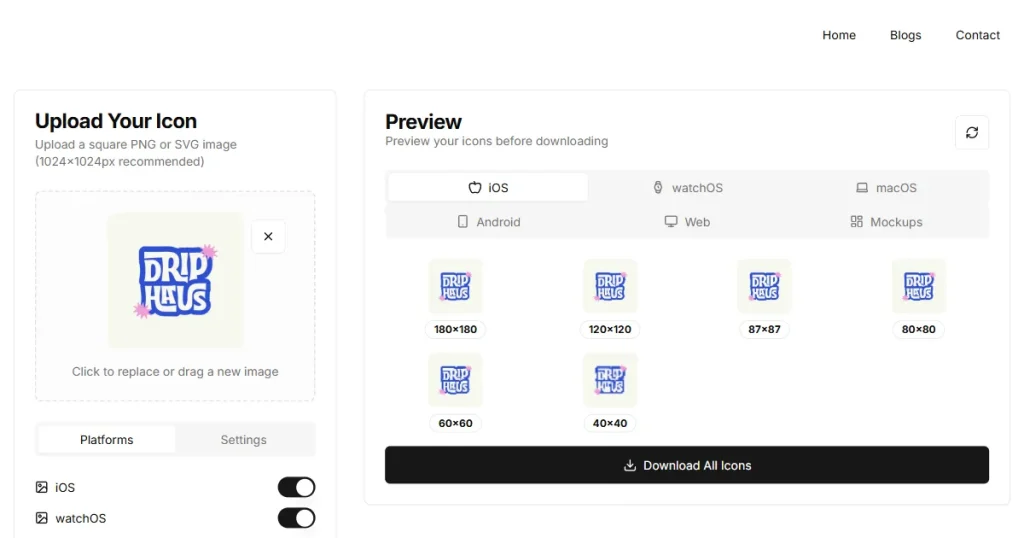
You will also learn how to use App Store Optimization tools such as AppLaunchpad, SplitMetrics Optimize, and AppIconly. You’ll also discover proven App Store optimization strategies like targeting specific keywords and using visuals that encourage more downloads.
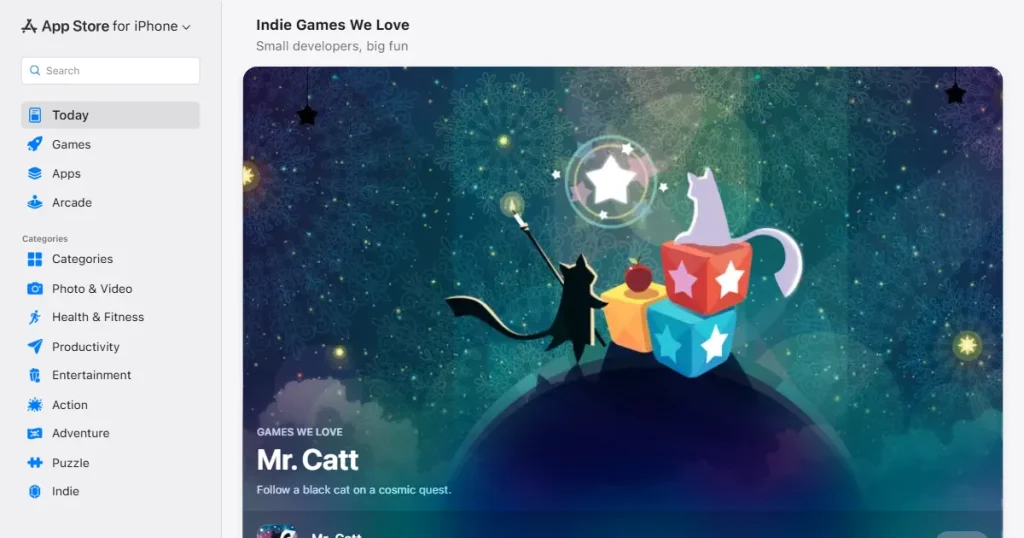
App Store Optimization, or ASO, means making your app easier to find and more appealing on the Apple App Store and Google Play Store. The goal is to help people discover your app and encourage them to download it.
ASO is like SEO, but for mobile apps. SEO helps websites rank higher on Google by using keywords, content, and user behavior. In the same way, ASO helps apps rank higher in app stores by focusing on factors such as titles, keywords, downloads, ratings, and how often people use the app.
For example, if you made a finance app, it’s smarter to target a specific phrase like ‘budget expense tracker’ instead of a broad term like ‘finance app.’ People searching for the exact phrase usually know what they want and are more likely to download.
To succeed in ASO, you need to know how visibility and conversion support each other.
You need both visibility and conversion to succeed. This balance is one of the key App Store Optimization best practices. If your app ranks high but your screenshots look bad, people will ignore you. If your visuals are great but you don’t rank well, not enough people will see your app, which is why strong ASO strategies focus on both.
In 2026, App Store Optimization is more important than ever. With tougher competition and major changes in App Store algorithms, it has become a must. Here are the main reasons why.
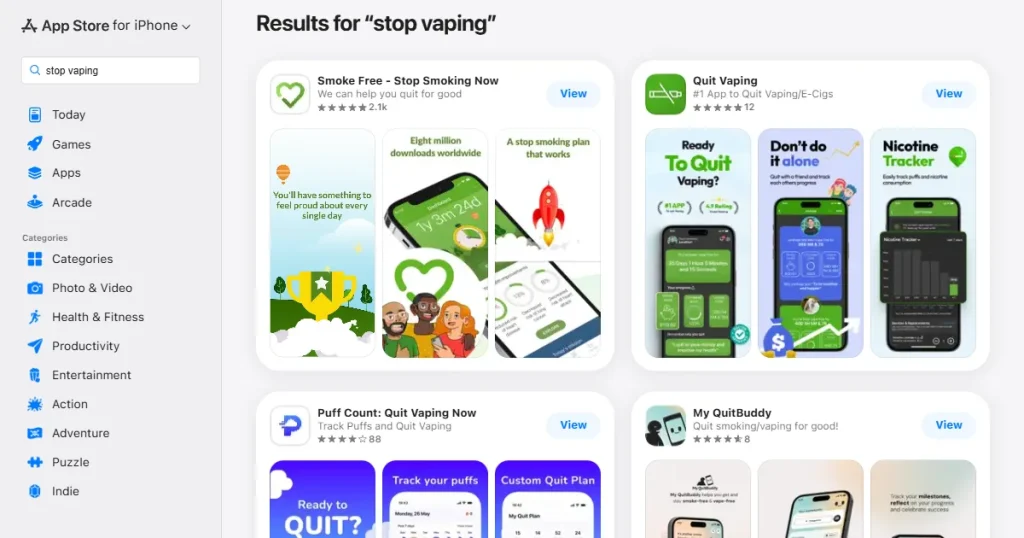
The app market is crowded. More than 65% of downloads come from people searching in the app store. With so many apps competing, being seen is your main challenge. If you rank on the first page, you get ten times more installs than if you’re on the second page.
That’s why it’s important to target niche search terms early. If you skip App Store Optimization, it will be hard for people to find your app.
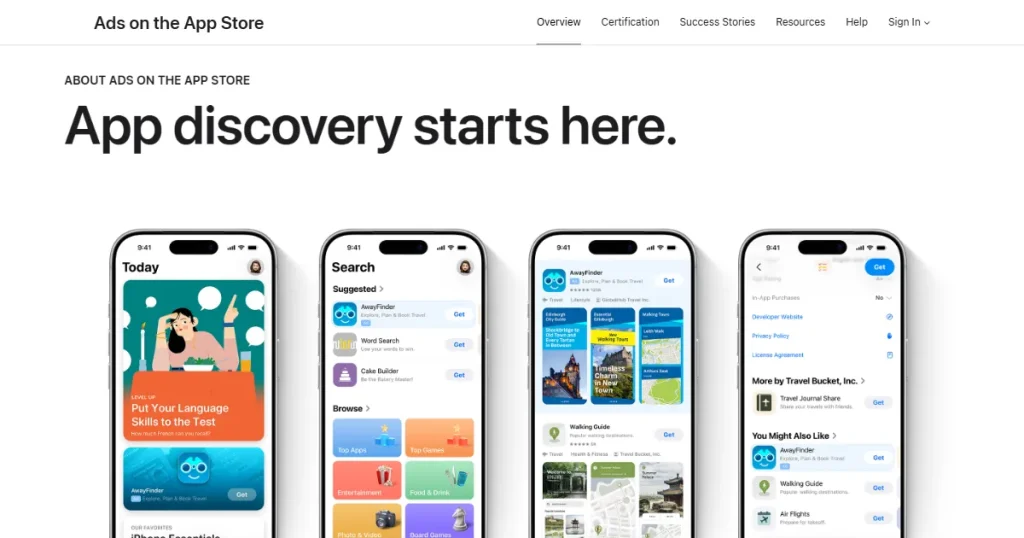
Many developers try to get quick results by spending money on Paid User Acquisition, but this often doesn’t work out well.
Ads can help you get noticed quickly, but the cost per install keeps going up. ASO gives you steady, long-term growth. Balancing organic and paid efforts is part of App Store Optimization best practices.
Try Apple Search Ads or Google Ads to find which keywords drive traffic, then focus on those keywords for your organic strategy. This way, you lower your costs. If you rely solely on ads, your growth stops when your budget runs out.
The store algorithms are incredibly smart right now. They care intensely about engagement and retention signals. They don’t just care that someone downloaded your app. They care if that person actually kept it installed.
Your conversion rate also affects your app ranking. Today’s App Store Optimization strategies must align with user behavior signals. Keyword stuffing no longer works. What matters most is matching what users are looking for.
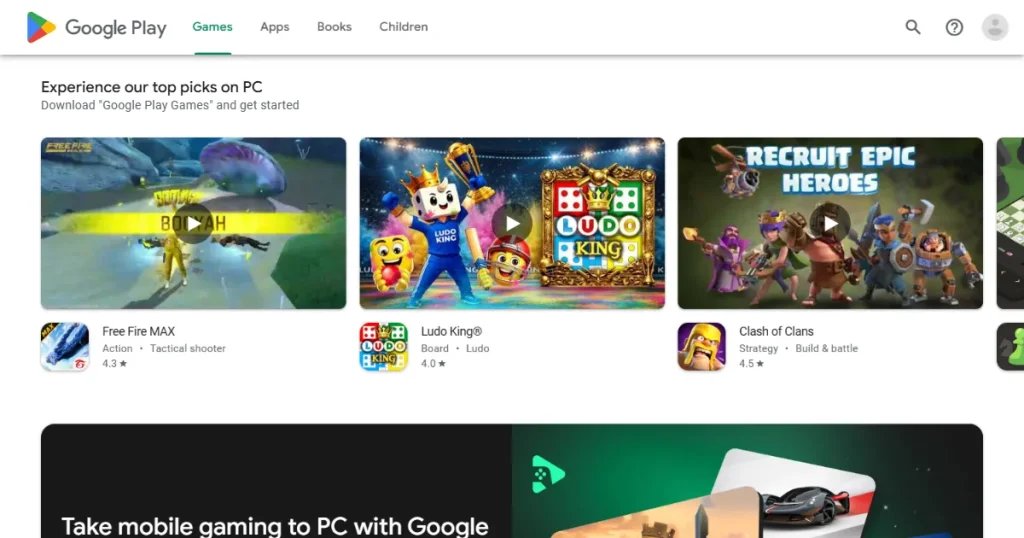
Google Play Store now relies heavily on AI to improve how apps are discovered and ranked.
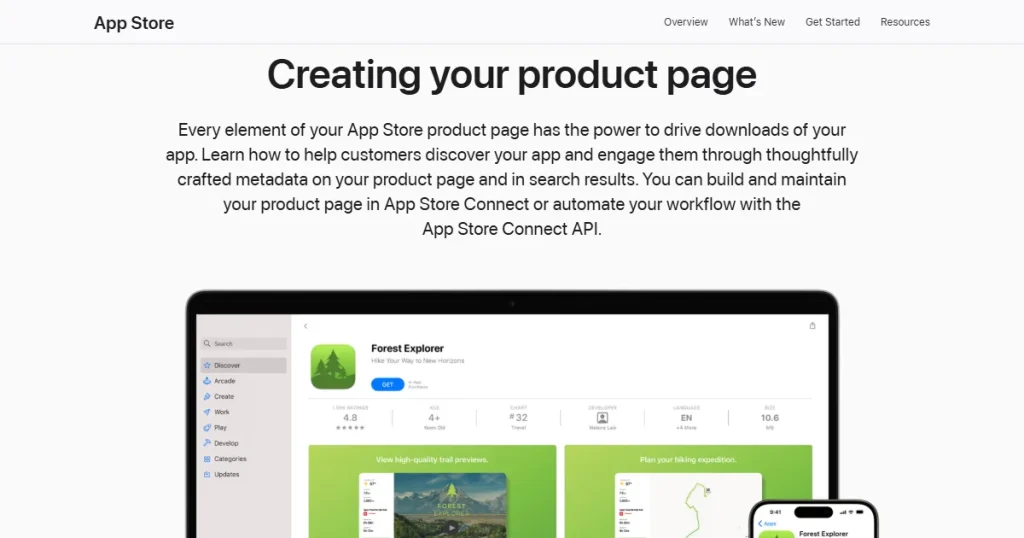
Both platforms now respond quickly to your app updates, changes in conversion rates, and performance drops. They reward apps with high user satisfaction, good ratings, and strong engagement.
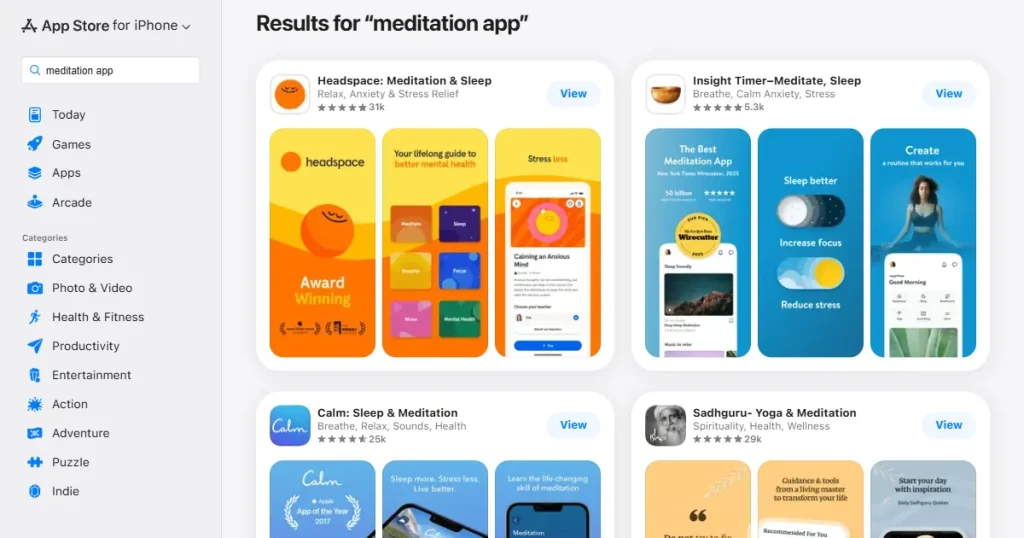
With AI search, app stores now understand what users mean, not just what they type. This shift makes modern App Store Optimization strategies more intent-driven. More people are using voice assistants, so searches are more conversational. Results are also more personalized based on user history. You need to optimize app screenshots and your app page for the whole user experience.
Growing your organic traffic takes time but pays off in the long run. It reduces your need for paid ads. Think of this as an ongoing process, not a one-time job, and pair it with regular product updates for lasting growth.
Here are the four main signals app stores use to rank your app. Understanding these signals is key to building effective App Store Optimization strategies:
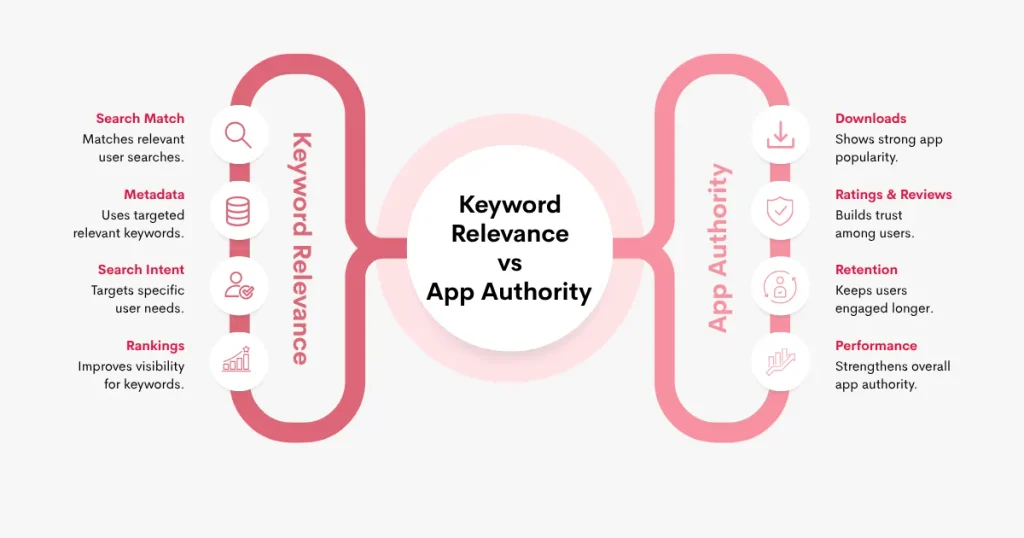
This is where developers usually get confused.
You have to earn authority. If you launch a fitness app today, you start with no authority.
Competing for big keywords like workout won’t work at first. Instead, focus on less competitive, specific phrases like ‘kettlebell workout timer for women.’ Build up reviews in that niche.
As your authority grows, the algorithm will start ranking you for bigger keywords. This is how long-term App Store Optimization strategies help scale app rankings.
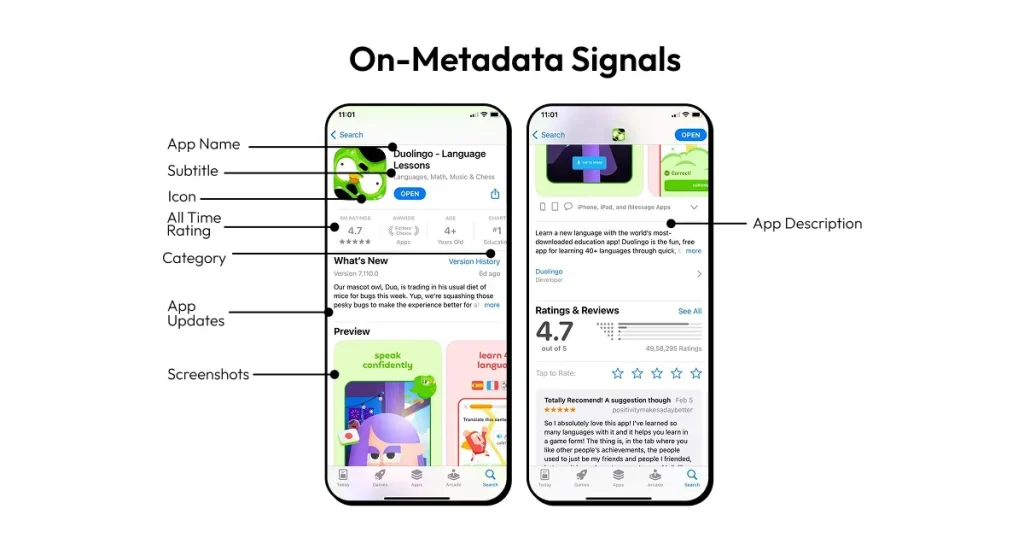
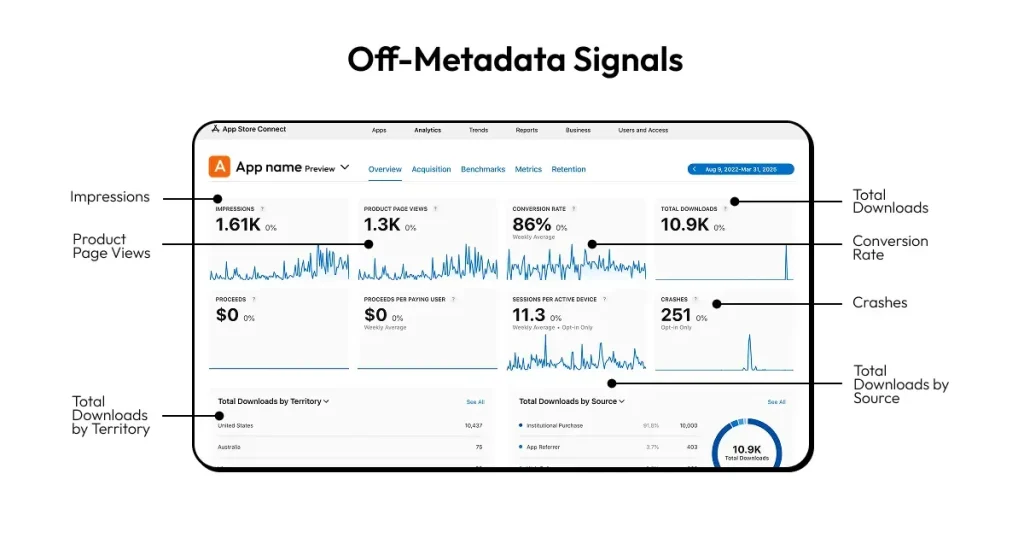
Algorithms use three main types of signals to rank your app.
1. On-Metadata Signals: On-metadata signals are the parts of your app listing that you can edit directly in the app store console.
2. Off-Metadata Signals: User behavior drives these, so you can influence them but not manually change them.
3. External Signals: The stores track whether you are bringing in high-quality traffic from Apple Search Ads, Google Ads, social media campaigns, or tech websites. High-quality external traffic proves your app is legitimate.
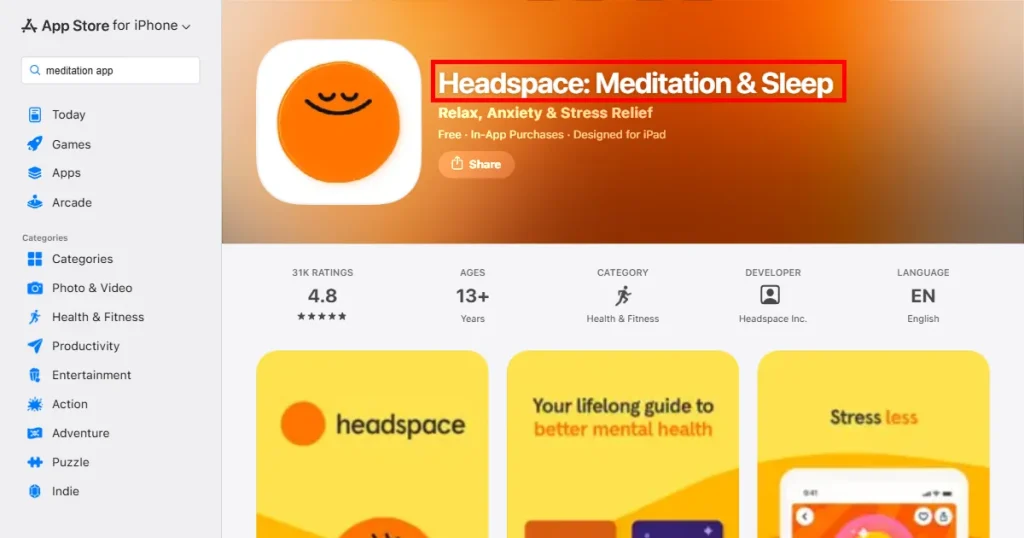
It’s important to structure your text well. Add your main keyword to the app title since it matters most. Add your secondary keywords naturally into the subtitles and descriptions.
A key rule, don’t repeat keywords. With limited space, repeating the same word across your title, subtitle, and keyword field reduces your keyword coverage.
Make sure your store page is optimized before increasing installs. Focus on attracting quality users, not just large numbers. If you get low-quality traffic and users delete your app right away, your ranking will drop, even if you have high installs.
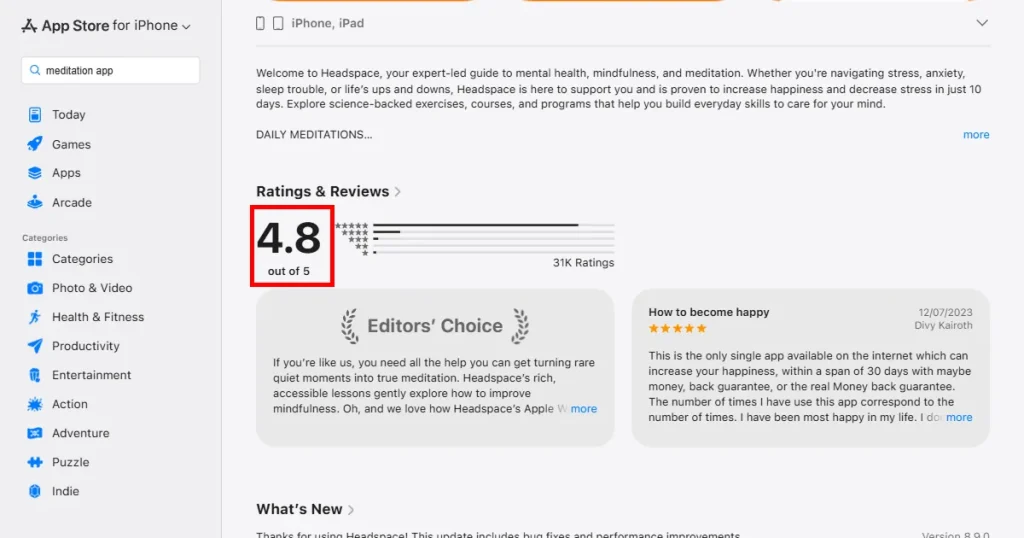
Apps with ratings higher than 4.5 usually do better because app stores highlight those with strong ratings and positive feedback. Keeping your ratings high is important for App Store Optimization, as good reviews help build trust, boost visibility, and encourage more downloads.
Best Practices for Reviews:
Text ASO: Titles, Keywords, and Descriptions
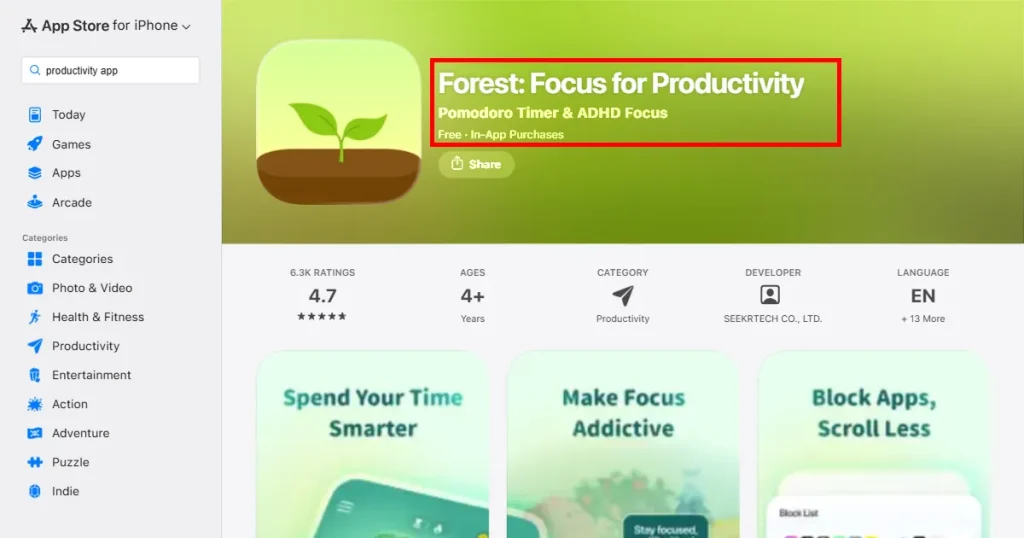
Choose one primary keyword and a few secondary ones. Focus on benefits, like ‘focus for productivity’ instead of just listing technical features. Make your titles easy to read and avoid stuffing in too many keywords, as it can hurt trust.
Visual ASO: Icons, Screenshots, and Videos
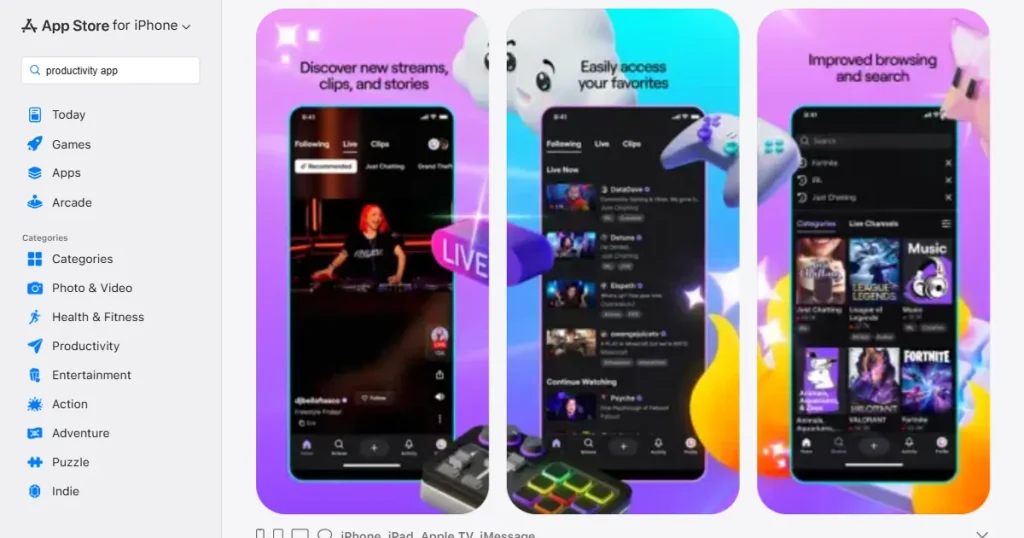
Your first two screenshots are the most important for conversions. Use bold text to highlight your app’s value. Show the real app interface, not just generic images. Make sure your visuals fit your audience. For example, a bank app should look secure, while a game app should look fun.
Implementation Workflow
Follow the steps below to implement your ASO in your app store listing.
Top App Store Optimization Tools for Visual ASO
Your visuals have a big impact on your conversion rate. Here are some App Store Optimization tools professionals use:
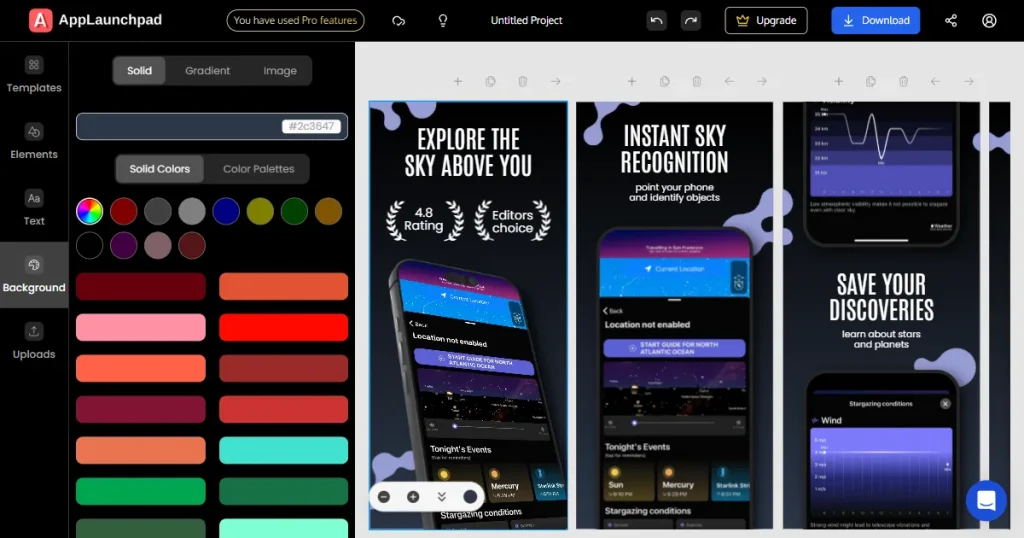
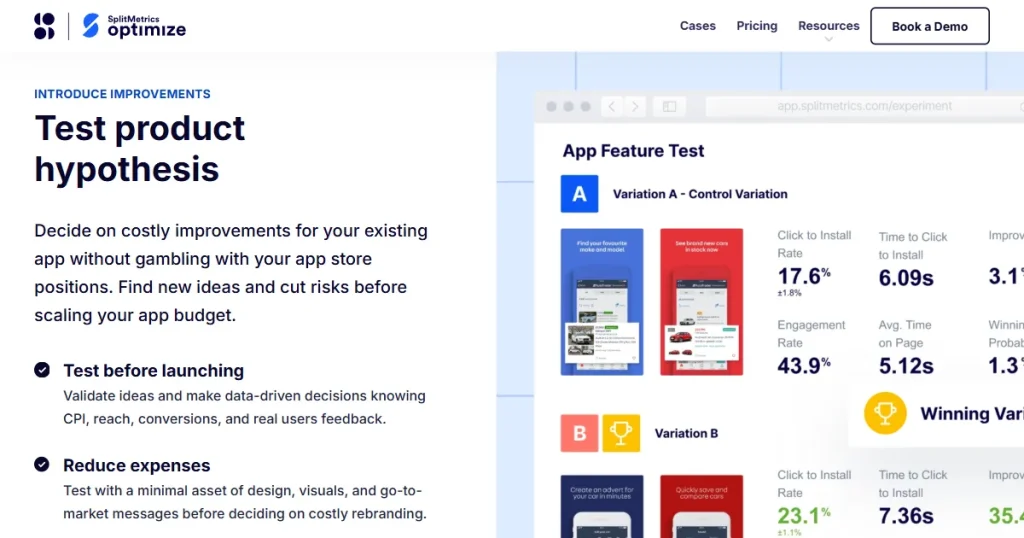
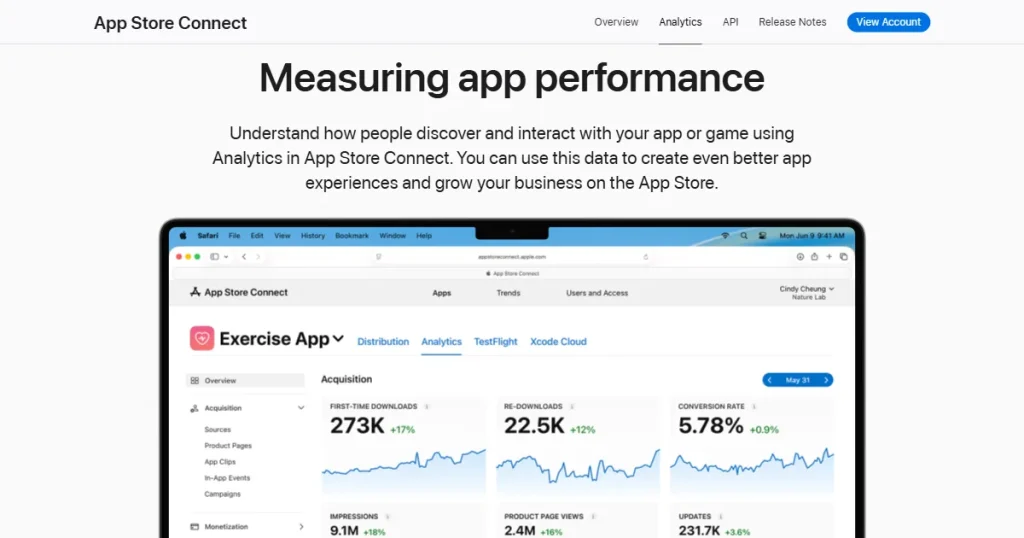
Off-metadata ASO optimization focuses on external factors like ratings, reviews, downloads, and engagement that influence your app’s visibility and ranking.
Downloads and Conversion Rates
Make sure your app store page is optimized before spending on ads. Once your page converts well, use paid campaigns to build momentum and increase downloads. Keep a close eye on your install-to-impression ratio.
Strong Ratings and Reviews
Use your app’s built-in review prompts at the right times. Don’t ask for reviews after crashes or failed payments. Ask when users are happy. If you get negative feedback, respond quickly and professionally.
External Traffic and Paid User Acquisition
Apple Search Ads are great for testing keywords. Run exact-match campaigns to find users who pay, then use those keywords in your organic text. Google Ads can help you test your funnel. High-quality traffic from TikTok or Reddit also boosts your app’s visibility. Using both paid and organic methods together creates a strong growth cycle.
If you’re looking for a practical plan for the next few months, try these top 10 App Store Optimization strategies.
App Store Optimization is now a key part of growing your app, not just an extra marketing tactic. The most successful apps focus on user intent, conversion, and retention. The best App Store Optimization strategies combine intent, conversion, and retention. Consistently applying App Store Optimization best practices is key to long-term growth. Combine your organic work with insights from paid campaigns to build lasting growth. Consistency is more important than one big push.
ASO is the continuous process of improving a mobile app’s visibility and ranking within app store search results, while simultaneously optimizing the store listing to increase the rate at which visitors convert into active installs.
App ratings have a massive, dual impact. Algorithmically, higher ratings signal quality to the app stores, directly improving your organic search rankings. Psychologically, strong ratings build immediate trust with potential users, significantly boosting your page’s conversion rates.
The industry-standard tools for keyword research, competitor analysis, and performance tracking include AppTweak, AppRadar, Mobile Action, and Sensor Tower. For A/B testing visuals, SplitMetrics and the native store consoles are highly recommended.
Some of the best App Store Optimization strategies include focusing on niche keywords, using A/B testing to boost conversions, adapting your approach for different markets, and making ongoing improvements based on real results.
Key App Store Optimization best practices include a commitment to regular app updates, meticulous data tracking, prioritizing high-quality, communicative visual assets, and actively integrating user feedback to improve both the product and the store listing.