
AppLaunchpad vs Launchmatic: Pricing & Features Comparison
AppLaunchpad vs Launchmatic: Pricing & Features Comparison
AppLaunchpad vs Launchmatic: a clear breakdown of pricing, features, templates, and which app screenshot tool works best.

App store screenshots and Google Play screenshots are no longer just supporting visuals. For most users, App store screenshots are the deciding factor. Before reading reviews or lengthy descriptions, people scan App Store and Google Play Store screenshots to understand what an app does and if it’s worth downloading. Using a dedicated App store screenshot tool ensures your screenshots look professional and trustworthy.
Multiple ASO studies show that high-quality App store screenshots can influence install rates by 60–70%, especially for users discovering an app for the first time. Poorly designed App Store and Google Play Store screenshots don’t just slow growth; they also undermine it.
As competition grows, relying on a generic App store screenshot tool is no longer enough. In this blog, we will compare the pricing and features of AppLaunchpad and Launchmatic and how they compare against each other.
AppLaunchpad vs Launchmatic: Quick Comparison Overview
| Feature | AppLaunchpad | Launchmatic |
|---|---|---|
| Tool Focus | ASO-focused screenshot generator | Basic screenshot editor |
| Best For | Ongoing ASO and frequent updates | One-time or short-term launches |
| Device Support | Latest iOS & Android devices | Older iOS & Android devices |
| Newest iPhone | iPhone 17 Pro Max | iPhone 12 Pro Max |
| Screenshot Templates | 1000+ device-specific templates | 18 pre-designed templates in-total |
| Localization | AI-powered bulk localization | Available but unreliable |
| Screenshot Cloning | Yes, preserves layout & styling | Partial, manual fixes needed |
| Export Formats | PNG & JPG | PNG only |
| Pricing Model | Freemium Pro plan starts at $29/month | Time-based access 30 Days unlimited ($20) Yearly unlimited ($50/year) |
AppLaunchpad: Overview and Features
AppLaunchpad is a specialized App store screenshot tool built to create App Store and Google Play Store screenshots. It is a dedicated App Store screenshot tool. The platform is centered on conversion-driven visuals, where screenshots act as growth assets.
AppLaunchpad’s core goal is to provide App Store screenshot templates that eliminate manual resizing, layout errors, and the risk of rejection. By using this App store screenshot tool, your App store screenshots are automatically scaled to the correct sizes, making AppLaunchpad an essential App store screenshot tool for apps that ship often and update across various devices and regions.
Key Features of AppLaunchpad
App Store screenshot generator: A dedicated App Store screenshot tool designed for App Store and Google Play requirements.
Device mockup generator: Built-in free device mockup generator for landing pages and marketing App store screenshots.
Device library: Extensive library of the latest iOS and Android device frames, including modern devices like iPhone 17 Pro Max, for all your App Store screenshots.
3D and hand-held devices: Get access to premium 3D multi-angle devices plus hand-held devices to go one step further.
Pre-designed templates: Over 1000+ pre-designed App store screenshot templates built with store-safe margins and layouts.
Localization: AI-powered localization of all your App Store and Google Play Store screenshots that translates entire screenshot sets in one click.
Screenshots cloning: App store screenshots cloning across devices without breaking layout, text, or branding.
Brand assets: You can upload custom fonts, images, and brand logos, plus get access to over 10K graphics, illustrations, and icons.
High-quality exports: High-resolution exports from the App Store screenshot tool in exact App Store and Play Store pixel sizes. AppLaunchpad supports both PNG and JPG App Store screenshots.
Screenshot design gallery: Screenshot inspiration gallery showcasing high-performing App Store screenshots by app category.
Pros of AppLaunchpad
App store screenshots and Google Play screenshots are compliant by design
Access to the latest iOS and Android devices
Extensive App store screenshot templates and asset library
AppLaunchpad offers a huge asset library including 10k+ graphics, illustrations, and icons.
Get your hands on 3D devices plus hand-held devices for an extra premium touch.
Beginner-friendly App store screenshot tool with drag-and-drop editor
Automatic scaling across all required store sizes
Strong localization workflow for multi-country launches
Cloud-based saving supports iteration and A/B testing
No software installation required
Cons of AppLaunchpad
No support yet for animated App store screenshots or preview videos.
Frequent use of the App Store screenshot tool may require upgrading to the Pro plan
AppLaunchpad Pricing
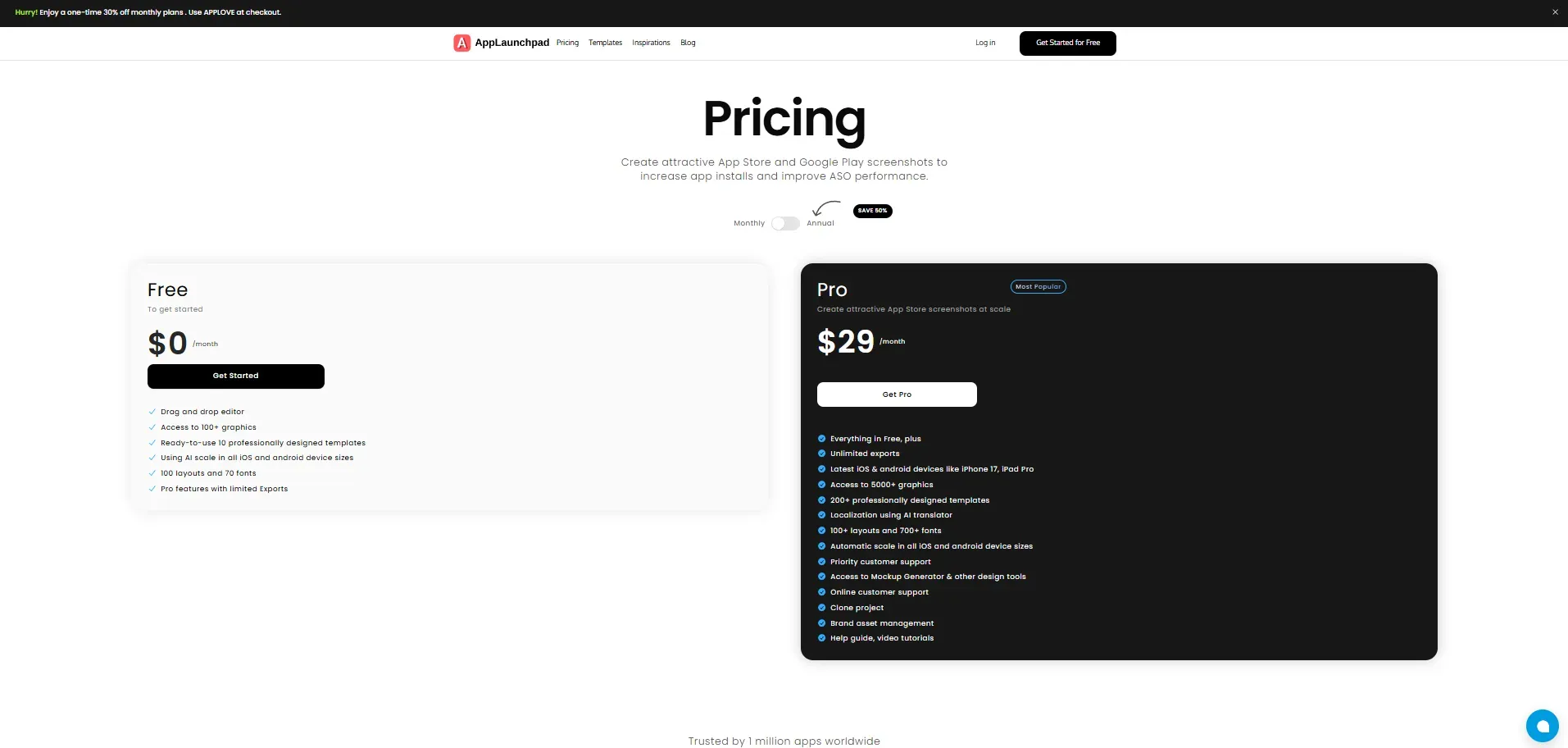
AppLaunchpad is an App store screenshot tool that follows a freemium subscription model and is designed for ongoing ASO work.
Free plan ($0/month) This plan works best for testing the platform and understanding how App store screenshot templates and scaling behave.
10 professionally designed App store screenshot templates
AI scaling across iOS and Android sizes
Pro plan ($29/month, billed monthly) The ultimate App store screenshot tool for teams. This plan is designed for teams running continuous ASO or multi-market launches.
Latest iOS and Android devices (including iPhone 17 and iPad Pro)
Unlimited App store screenshots exports
1000+ professionally designed App store screenshot templates
This pricing structure works best for teams that update screenshots regularly and want predictable long-term costs rather than time-limited access.
Launchmatic: Overview and Features
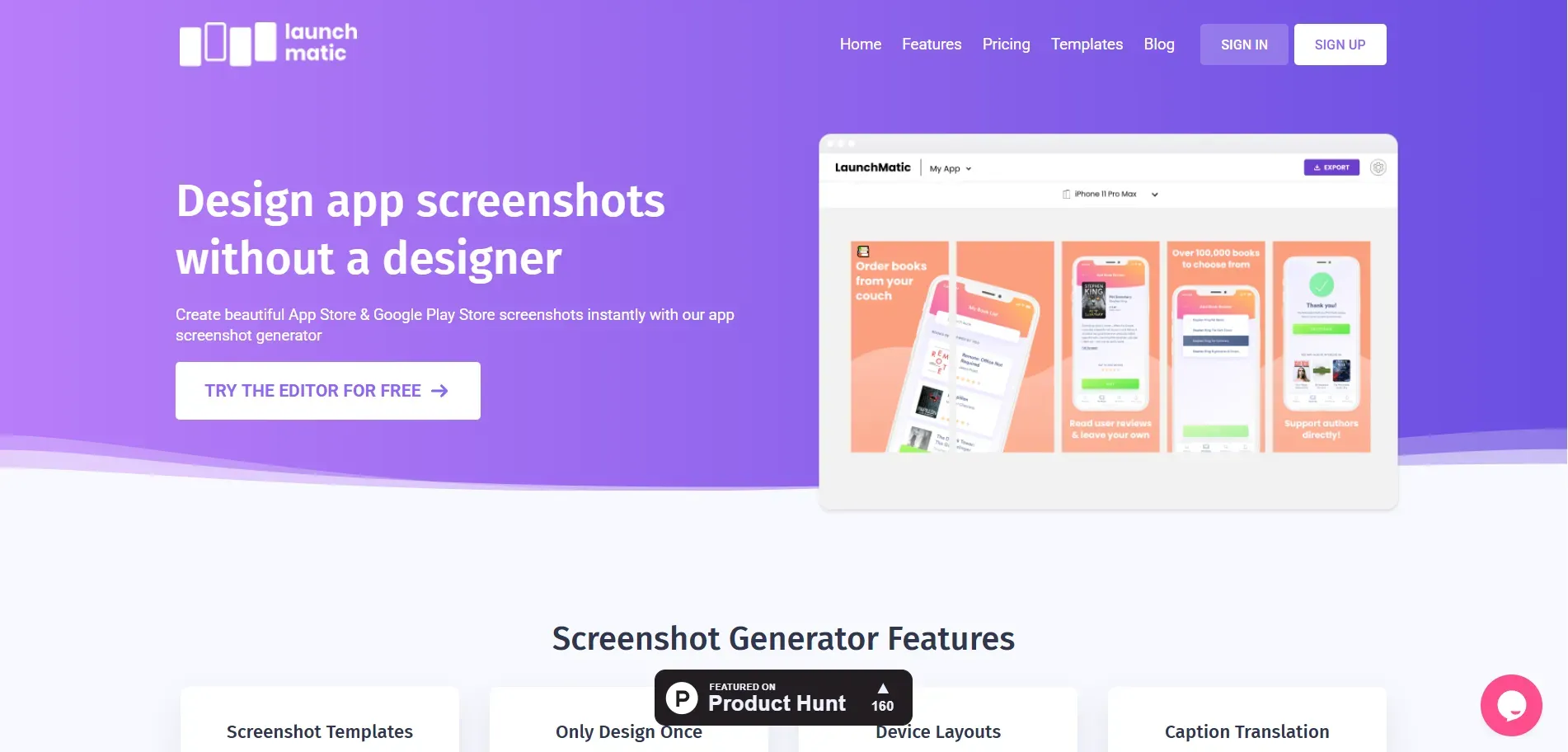
Launchmatic is a basic App Store screenshot tool. It offers a simple way to generate App Store and Google Play Store screenshots quickly. While it provides App store screenshot templates, it is less optimized for scaling App store screenshots across multiple regions than a more robust App store screenshot tool. It is built more for quick setup and short-term usage than for long-term investment.
Launchmatic is best for solo developers or small teams that want to generate screenshots quickly and move on. However, it is less optimized for scaling across devices, frequent updates, or localization at scale.
Key Features of Launchmatic
App screenshot generator: Basic App Store screenshot tool for Apple App Store and Google Play Store.
Create from scratch: Ability to start from App Store screenshot templates or create screenshots from scratch.
iOS and Android devices: iOS and Android device layouts, including phone and tablet formats.
Device styles for App store screenshots: Launchmatic offers 3 device styles: Real, Clay, and Matte.
Niche-specific templates: App store screenshot templates are grouped by app category.
Portrait and Landscape screenshots: Portrait and landscape App Store screenshots available.
Basic text controls: Text controls for font family, size, color, alignment, and bold styling.
Automated edits: Launchmatic offers a “Apply to all” feature that automates text edits across screenshots in the App Store screenshot tool.
Background customization: Background options include solid colors, gradients, and image uploads.
Pros of Launchmatic
Simple and easy to get started with the App Store screenshot tool
Clean text and background controls
Everything inside a template is editable
Apply to all feature saves time on repetitive edits
Partner integration allows direct store uploads (may require registration or extra cost)
Time-based pricing can be cost-effective for short projects
Cons of Launchmatic
No guaranteed compliance validation for store guidelines
Outdated device library and App store screenshots
Minimal App store screenshot templates
The editor can feel buggy during detailed adjustments
The localization feature is unreliable and error-prone
No free exports for App Store and Google Play screenshots, paid plan required to download screenshots
PNG-only exports, no JPG option
Interface navigation can feel confusing once inside the editor
Launchmatic Pricing
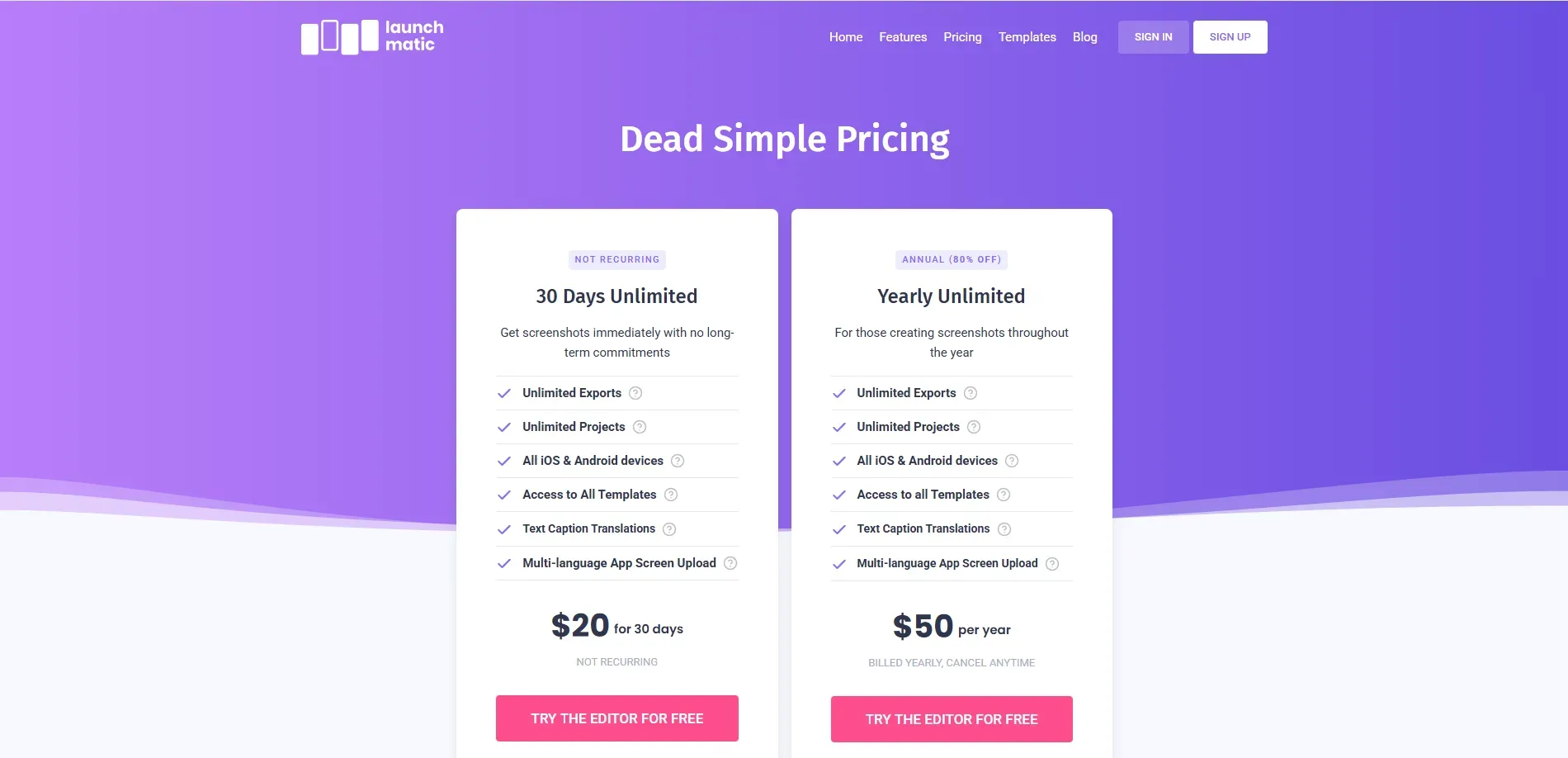
Launchmatic uses a time-based access model, rather than a traditional feature-tiered subscription.
30-Day Unlimited Plan ($20 one-time)
Unlimited exports
Unlimited App store screenshots projects
Access to all devices and App store screenshot templates
Text caption translations
Multi-language screen uploads
This plan works best for one-time launches or short ASO sprints.
Yearly Unlimited Plan ($50/year)
Same features as the 30-day plan
Subscription-based access for a Full-year access to the App store screenshot tool
No additional tools or automation included
This pricing model is most cost-effective only if the screenshot work is clearly time-bound. For ongoing updates, the value drops quickly.
AppLaunchpad vs Launchmatic: Feature Comparison
The fundamental difference between AppLaunchpad and Launchmatic shows up once you start comparing how they behave in real-world workflows and how you manage App store screenshots.
AppLaunchpad is a structured App store screenshot tool. It assumes screenshots will be updated often, reused across devices, and localized for multiple markets. Launchmatic assumes that screenshots are a one-off task you complete and then move on.
Screenshot Templates and Customization
When it comes to App Store screenshot templates, AppLaunchpad offers an extensive library of 1000+ device-specific templates. These App store screenshot templates guide text placement, spacing, and visual hierarchy, which helps maintain clarity and compliance for better App store screenshots.
Launchmatic has fewer App Store screenshot templates, only 18 in total, grouped mainly by app category, which often requires manual layout fixes when switching devices or orientations.
Device Frames and Supported Devices
Device support is another significant gap. A modern App store screenshot tool, AppLaunchpad supports the latest iOS and Android devices, including premium 3D and hand-held frames. This helps screenshots feel modern and trustworthy.
Launchmatic’s device library is stuck on outdated device models, which can make your app look unprofessional and out of step with current trends. AppLaunchpad regularly updates its App store screenshot templates, whereas Launchmatic's App store screenshots can feel outdated.
Localization and Multi-Device Scaling
AppLaunchpad supports bulk localization and handles device cloning while preserving layout and branding. Launchmatic offers translation and cloning, but both require more manual steps and frequent corrections.
Over time, this difference adds up in both effort and consistency. For localization, AppLaunchpad is the superior App store screenshot tool, efficiently scaling App store and Google Play Store screenshots.
Export Quality and Formats
Export quality and flexibility also favor AppLaunchpad. It supports both PNG and JPG exports in exact store sizes, reducing upload issues. Launchmatic supports only PNG and requires a paid plan to export.
Overall, AppLaunchpad prioritizes saving time and reducing errors at scale, while Launchmatic prioritizes speed for short-term use.
How to Create App Store or Play Store Screenshots with AppLaunchpad
Follow the Steps below to high-converting App Store screenshots using AppLaunchpad
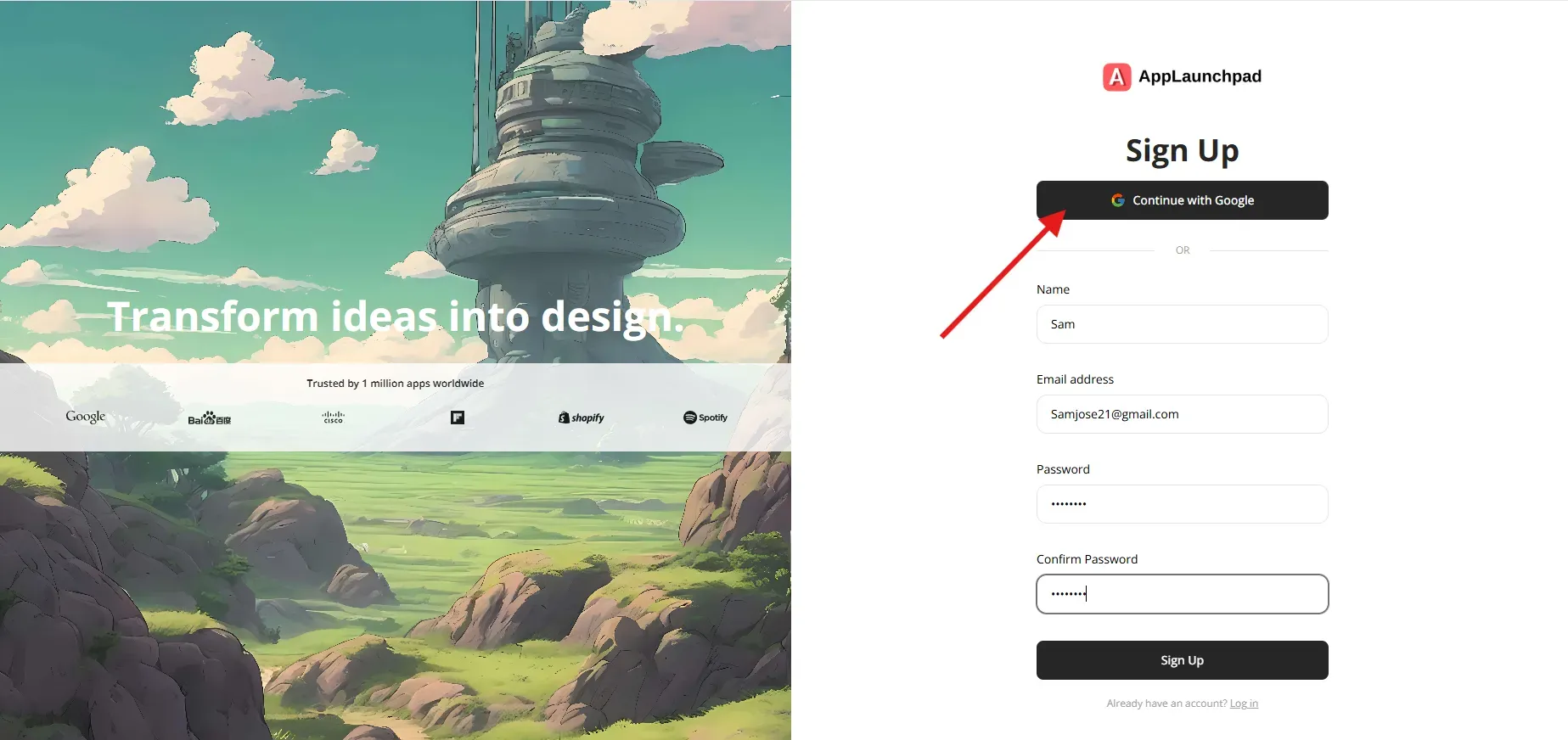
Step 1: Create an account on AppLaunchpad using Google sign-in or email, or log in using saved credentials if you already have an account
Step 2: Choose how you want to create screenshots(pre-designed templates or start from scratch).
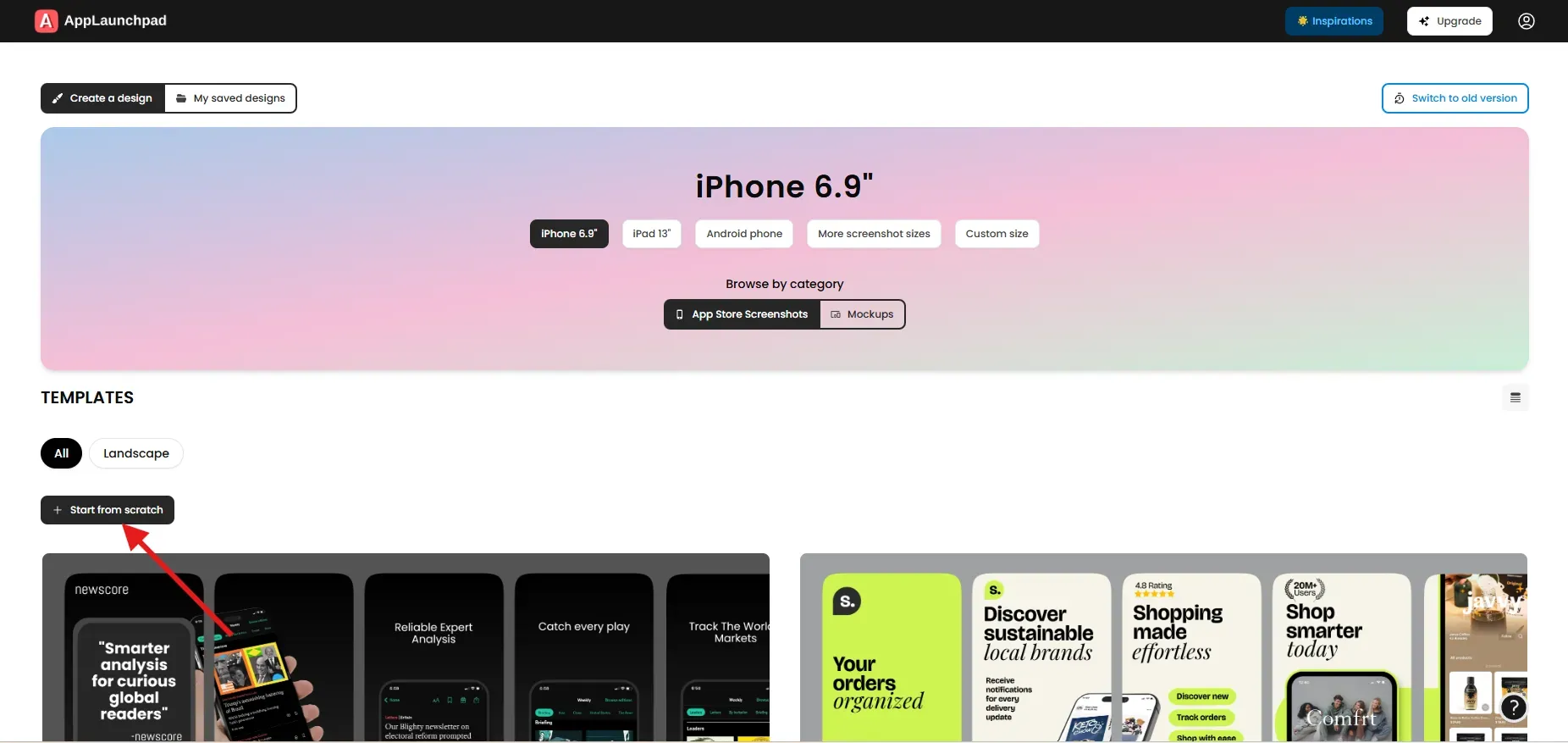
In this blog, we are covering the pre-designed templates method. Start by selecting a device type, such as iPhone, iPad, Android phone, or Android tablet.
Step 3: Pick a screenshot template from the available options.
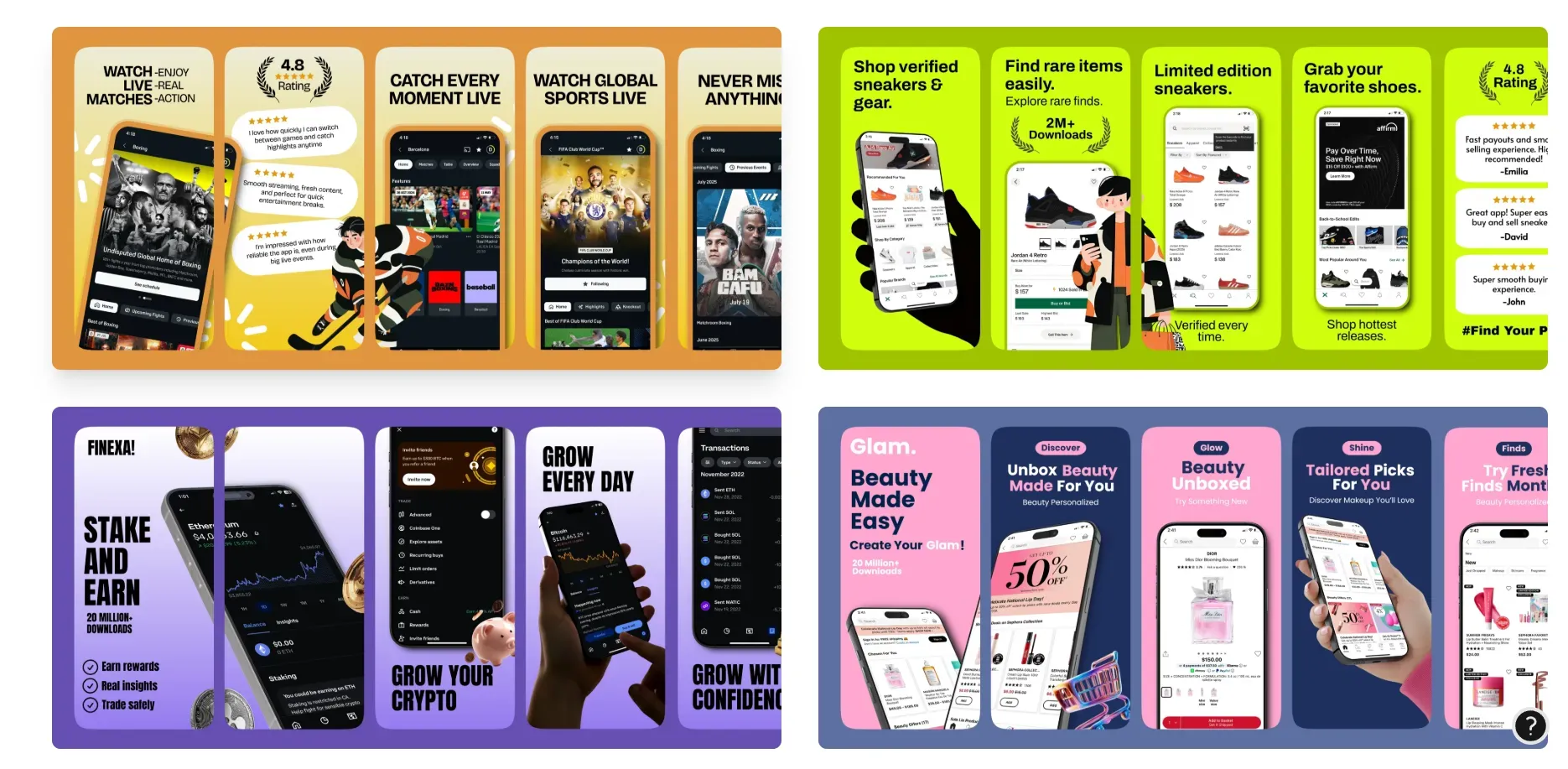
Step 4: Once inside the editor, start customizing the selected template
Step 5: Upload your app screens and place them into each screenshot frame
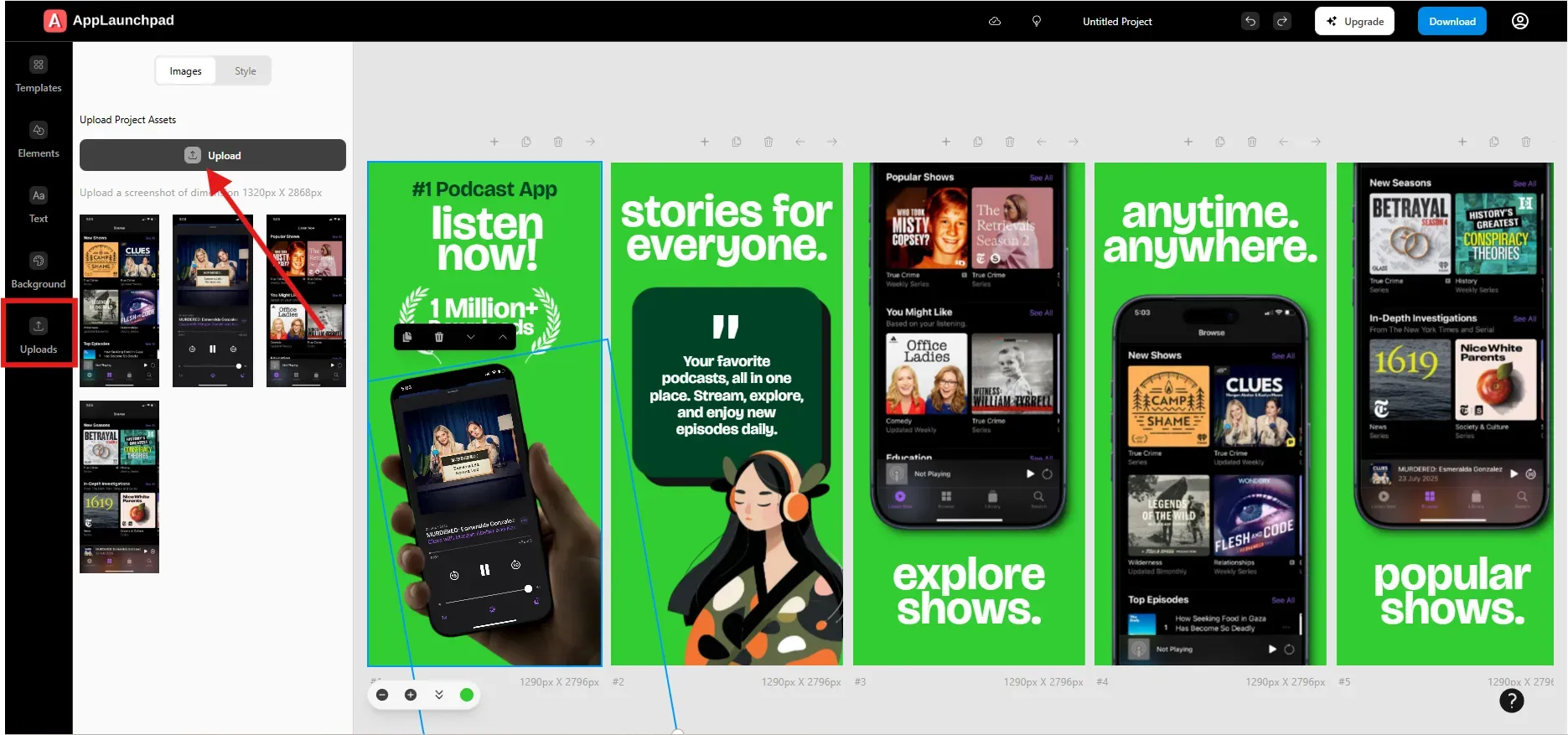
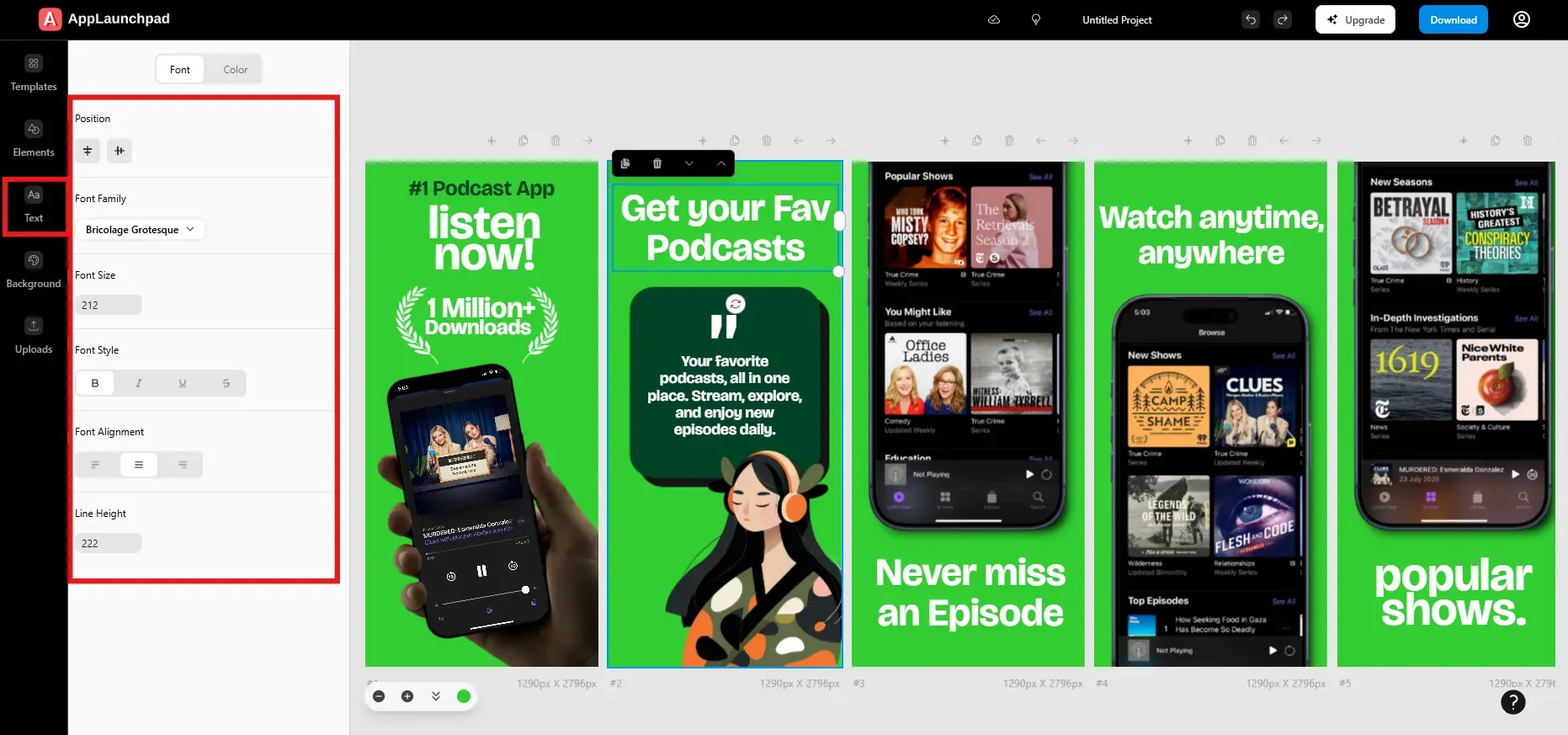
Step 6: Add, remove, or edit text inside the template. Customize font size, alignment, and spacing for better readability.
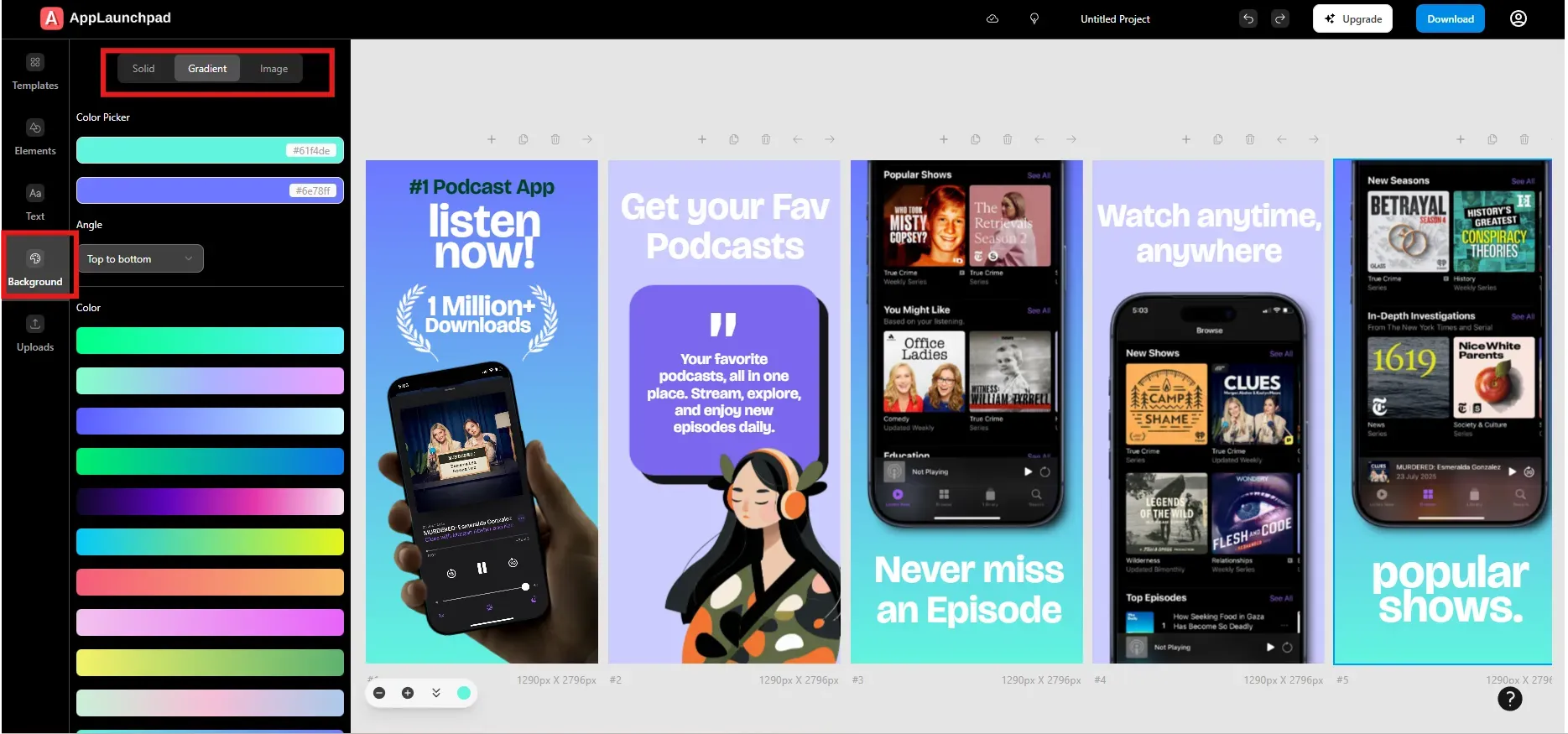
Step 7: Apply background customization if needed. Choose a background color, gradient, or upload a background image.
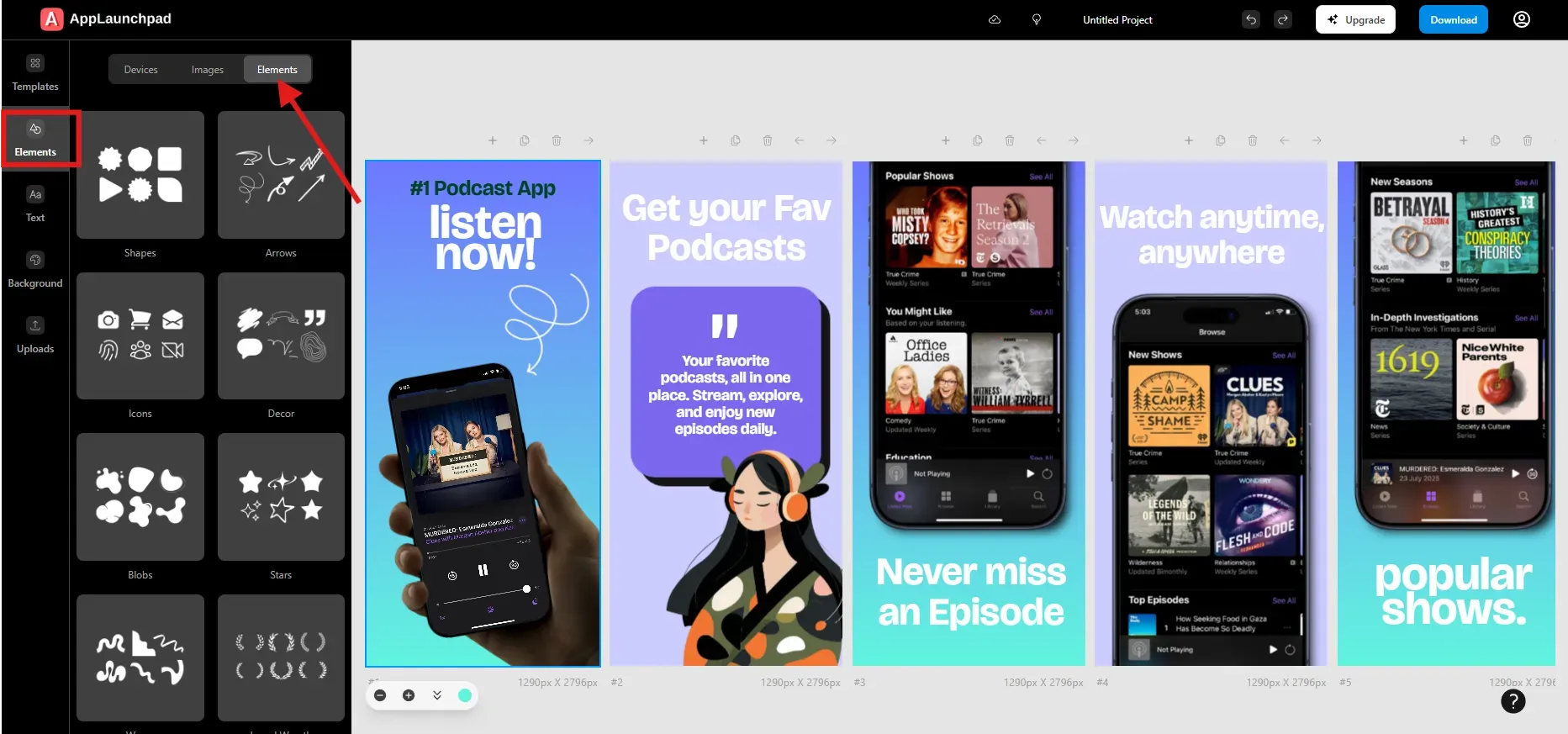
Step 8: Add extra elements like App Store or Google Play badges, App icons, Illustrations, or design elements
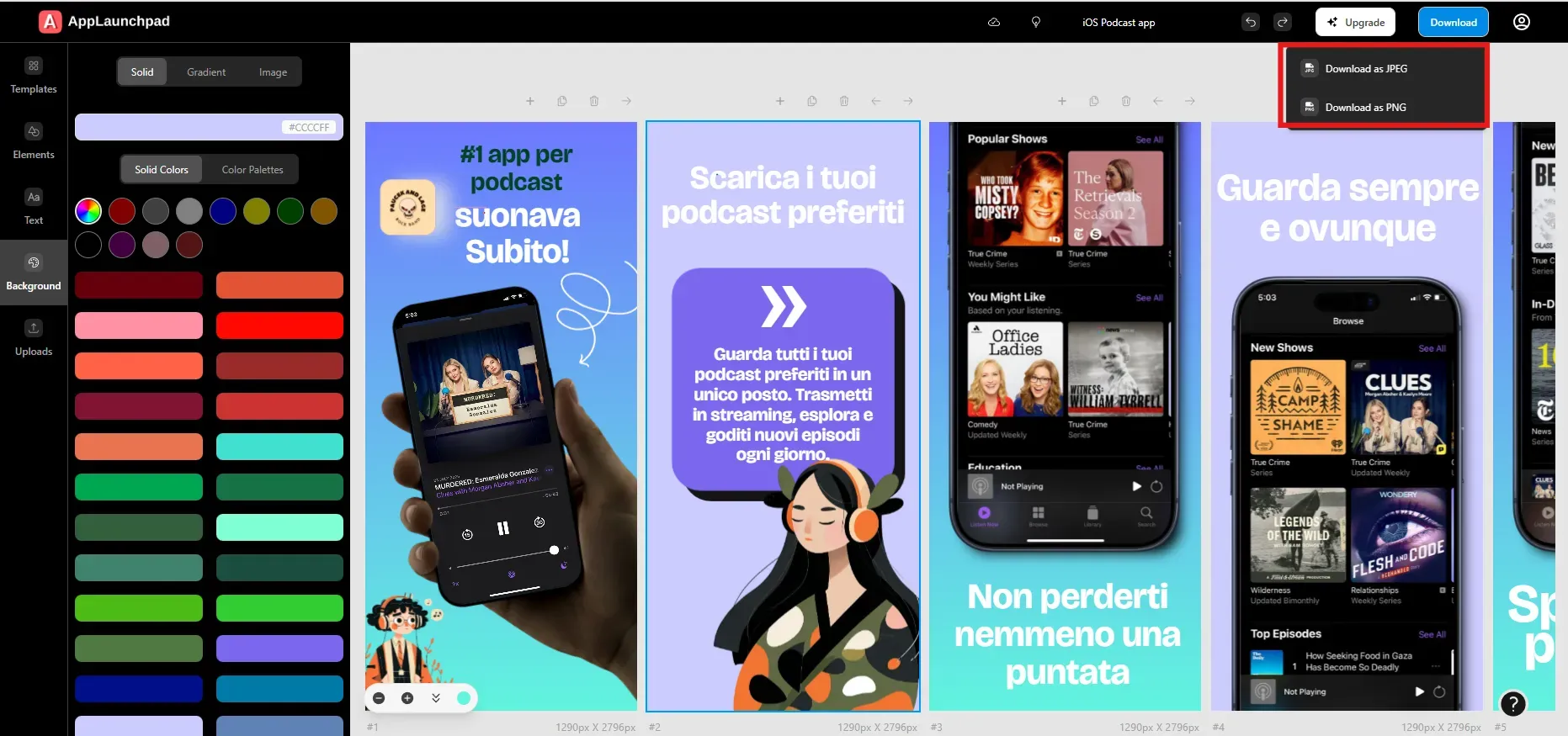
Step 9: Export your screenshots as JPG or PNG. Screenshots will be downloaded as a ZIP file to your local computer.
Note: All projects are automatically saved. You can return at any time to make edits or revisions without starting over.
Final Verdict: AppLaunchpad vs Launchmatic
Choosing between AppLaunchpad and Launchmatic depends less on features and more on how you plan to manage screenshots over time. If App Store screenshots are a one-time task for a single launch, Launchmatic may be sufficient. It’s quick to set up, easy to use, and reasonably priced for short-term use.
However, if screenshots are part of your ongoing ASO strategy, AppLaunchpad is a better choice. It supports modern devices, scales smoothly across both App Store and Google Play, handles localization more reliably, and follows crucial App Screenshots Guidelines. These advantages matter more as your app grows.
Launchmatic is a fine App store screenshot tool. However, for ongoing growth. AppLaunchpad is the better choice for App store screenshot tools. It offers better App Store screenshot templates and handles App Store and Google Play Store screenshots more reliably.
For teams shipping frequent updates, expanding into new regions, or testing different screenshot variations, AppLaunchpad delivers far better long-term efficiency. In simple terms, Launchmatic works for quick launches. AppLaunchpad works for growing apps.
Frequently Asked Questions (FAQs)
1. How does AppLaunchpad handle multi-device screenshot scaling and cloning?
AppLaunchpad allows you to design a set of screenshots once and clone it across devices like iPhone, iPad, and Android. Layout, text, backgrounds, and branding remain unchanged while only the device frame is swapped.
2. What level of customization and control does Launchmatic offer for screenshots?
This App store screenshot tool lets you manually edit App store and Google Play Store screenshots, giving you greater control over your screenshots.
Launchmatic focuses on manual customization. You can freely edit text, backgrounds, and device styles, or start from a blank canvas if needed. While this gives flexibility, it also means more hands-on work.
3. Which tool is better for indie developers?
Indie developers who plan to update App store screenshots regularly should choose AppLaunchpad for its superior App store screenshot templates, test variations, or localization for new markets. Launchmatic is better suited for indie devs who launch once and don’t expect to revisit screenshots often.
4. Which tool offers better support for devices and templates?
AppLaunchpad offers broader, latest models device support and a much larger device-specific template library. Launchmatic’s device and template options are more limited, which may feel restrictive over time.
5. Can AppLaunchpad and Launchmatic handle localization at scale?
AppLaunchpad is a powerful App store screenshot tool for bulk localization of App store and Google Play Store screenshots. AppLaunchpad supports bulk, AI-powered localization in one click. Whereas Launchmatic offers limited localization features and often requires manual fixes.
Related Blog