
ASO vs SEO: Difference Between Ranking in App Store…
The ASO vs SEO debate comes down to differences in…
SEO for Apps is the process of improving your app’s visibility so users can discover it organically across search engines and app marketplaces. Unlike traditional SEO, which focuses on ranking websites on Google, App SEO helps your app appear where users actively search for solutions.
Most app growth strategies focus on App Store Optimization (ASO), which helps apps rank for relevant keywords inside the App Store and Play Store. But app discoverability is no longer limited to marketplaces alone, as search engines like Google can also drive organic traffic to your app.
In this guide, we’ll cover everything you need to know about how App SEO works, the difference between SEO and ASO, the best strategies to improve app visibility, and how to grow your app through organic user acquisition.
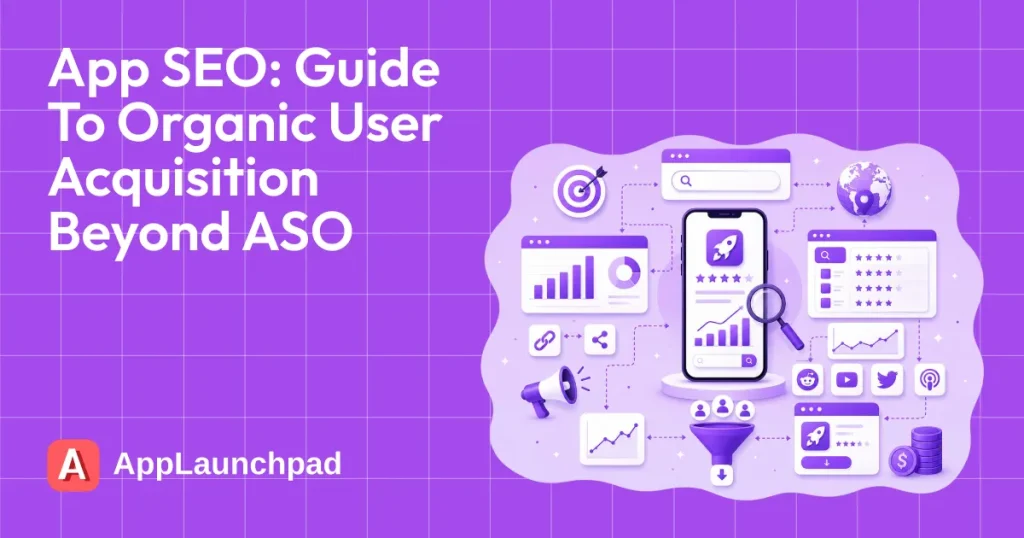
SEO for Apps is the process of optimizing your app website, landing page, and app store listings to increase their discoverability across the web. This is important because many users begin their search on Google before deciding which app to download.
When your app page is properly optimized for SEO, the likelihood of discovery increases significantly, leading to more organic downloads and revenue. However, ranking on Google is not the same as ranking in app stores, which is why Mobile App SEO tools play an important role in the optimization process.
Before we dive deeper into the best App SEO best practices, let’s learn about the three main ways users can discover your app organically, including through app stores, where App Store ranking factors play a key role.
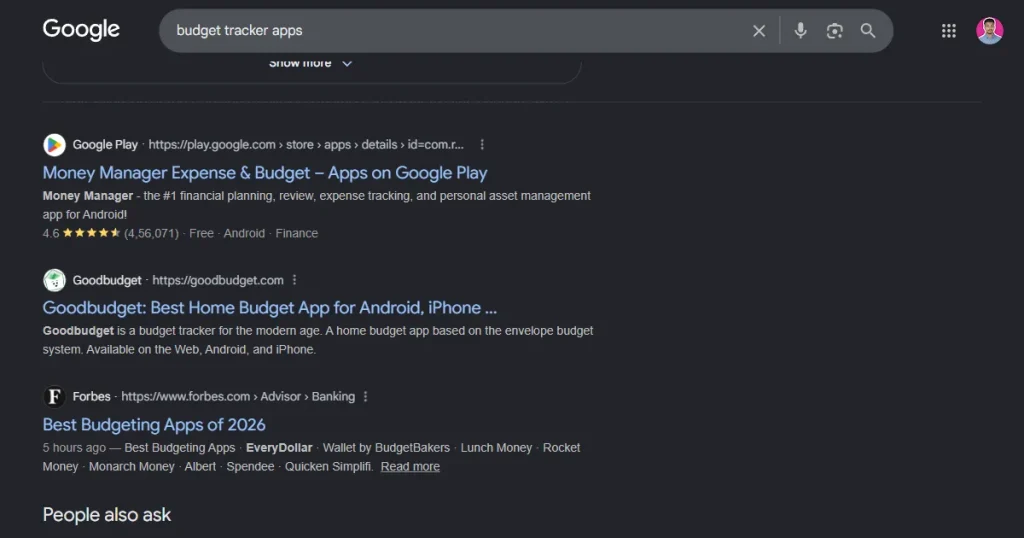
Before searching for an app on App Stores, many users start their search on Google with queries like best app for tracking my expenses or free meditation apps.
If your app landing page is optimized for these keywords, your landing page has a better chance of ranking in search results, improving visibility, and increasing the likelihood of people downloading your app.
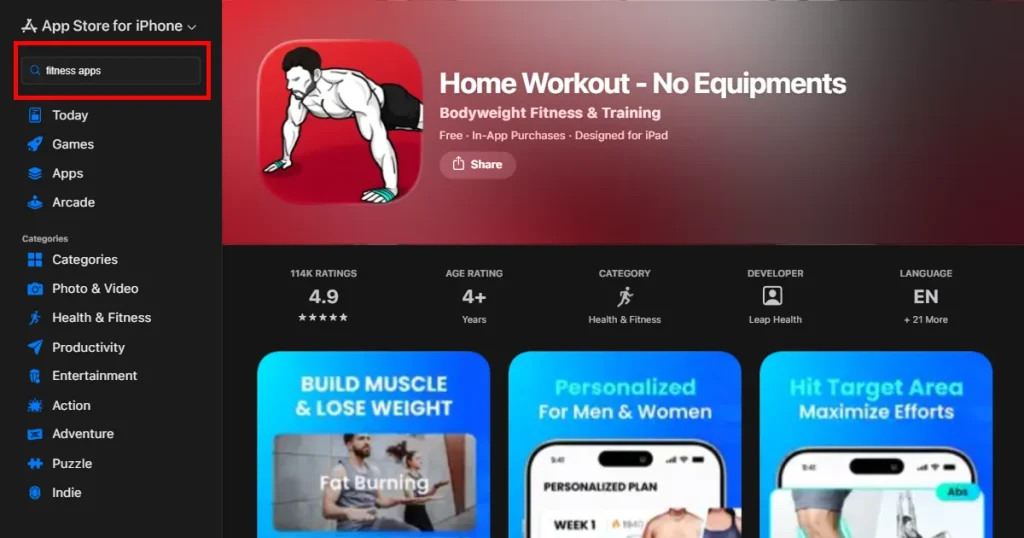
On the App Store, it is crucial to optimize your app with the right metadata, including title, subtitle, keyword field, and description, to rank in search results when people search for related terms and get featured in the suggestions tab.
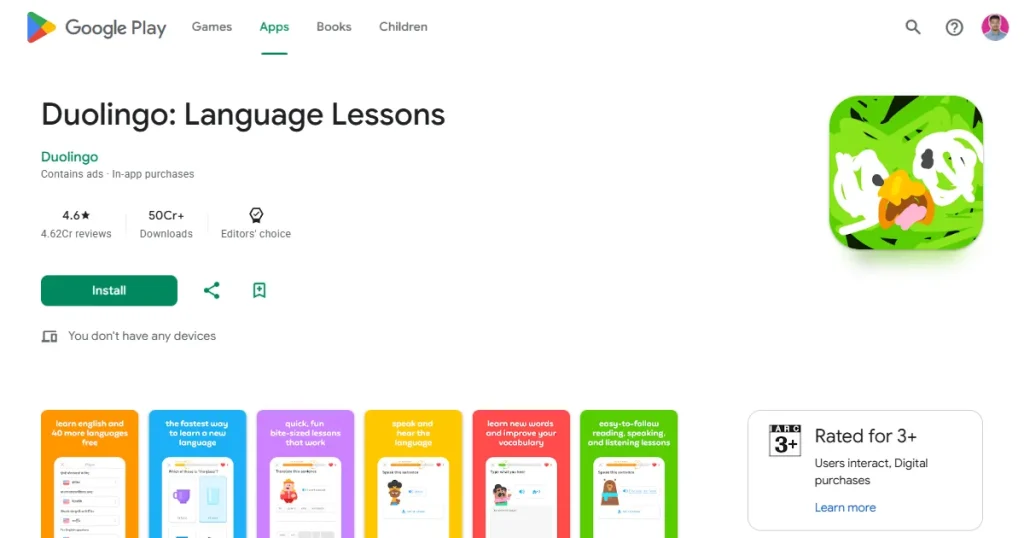
Google Play discoverability is similar to SEO, which means you have more opportunities to integrate your keywords into your app descriptions, screenshots, title, and more to improve discoverability.
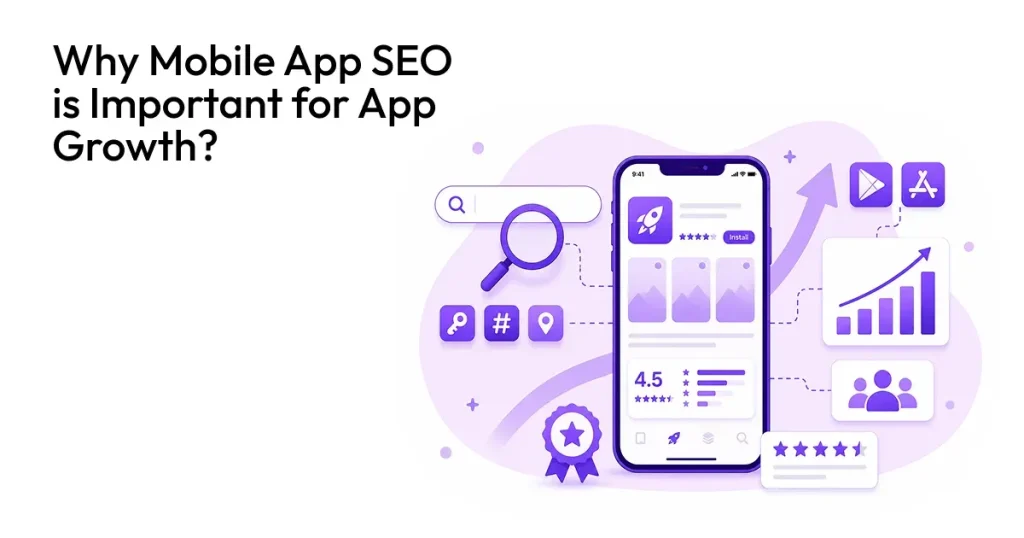
Here are a few reasons why Mobile App SEO is an important tool for your app’s growth.
By optimizing your app website, landing page, and content, you can ensure your app gets more visibility in search results, which, in turn, leads to more organic downloads without any significant effort on your part.
By optimizing your app for relevant keywords, you can reach users who are actively searching for the type of solution your app provides, leading to higher conversion rates.
For example, people searching for the best habit trackers are more likely to download your app than people looking for how to build habits.
Relying solely on ASO limits your app’s discoverability to app store searches, thereby missing major opportunities to reach a much wider audience. By optimizing for search engine discovery, you increase the chances your app will be found beyond app stores.
Paid ads are a major acquisition channel for new apps, whether they invest in Apple Ads, Meta Ads, or Paid UGC on social media platforms. App SEO helps people find your app organically, so you don’t have to depend as much on paid marketing.
Before we dive deeper into the difference between App SEO and ASO, let’s look at their differences at a glance.
| Element | ASO | SEO |
| Main Platform | App Store and Google Play | Google and other search engines |
| Primary Objective | Increase app downloads | Drive website visitors |
| Ranking Factors | Keywords, ratings, retention | Content, backlinks, relevance |
| Content Type | App titles, descriptions, visuals | Blogs, landing pages, web content |
| Trust Signals | Reviews and install activity | Domain authority and backlinks |
| Conversion Drivers | Screenshots and app previews | Meta titles and descriptions |
| Competition Level | Competing against other apps | Competing against web pages |
| Best Tools | AppTweak, Sensor Tower | SE Ranking, Google Search Console |
| User Intent | Users looking to install apps | Users searching for information |
Now that we know how App SEO and ASO differ, let’s dive deeper to understand what makes each important and how they differ.
ASO is focused on App Store discovery with different algorithms for the Apple App Store and Google Play Store. However, SEO has a much wider scope, with billions of people searching for keywords related to your app on search engines each day, increasing the likelihood that your app will be discovered.
Another major difference between ASO and SEO for apps is in their search intent. When people search for an app on app stores, they have the goal to find an app and download it.
Since users on search engines are not always looking for a specific app, you have the opportunity to engage them at an earlier stage. By doing so, you can establish brand familiarity, ensuring they recognize and consider your app when they are ready to download.
App stores rank your app based on your app title, subtitle, description, keywords, and reviews. However, SEO for apps depends on backlinks, topic coverage, keyword density, page speed, and overall content clarity to rank your page.
To maintain your ranking on the App Stores, focus on keyword ranking, search visibility, conversion rate, and reviews. However, to maintain your ranking on search engines, you need to focus on keyword research, proper indexing, building backlinks, and page clarity.
To do proper mobile app SEO optimization, you need to follow these guidelines.
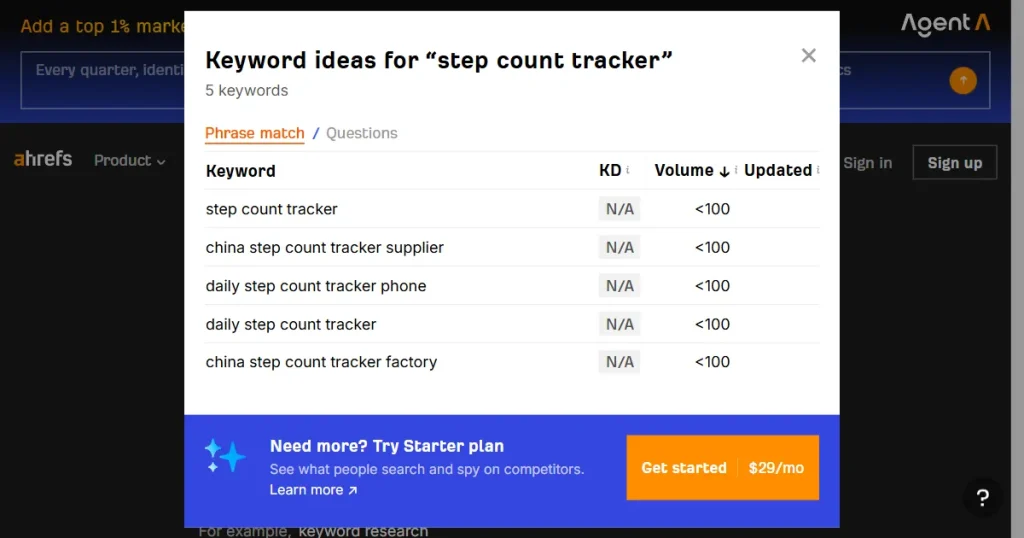
The first and foremost step is to conduct proper keyword research to find high-intent, low-competition keywords you can rank for easily. To do that, you can search for keywords related to your app on tools like Ahrefs, Semrush, and Google Keyword Planner.
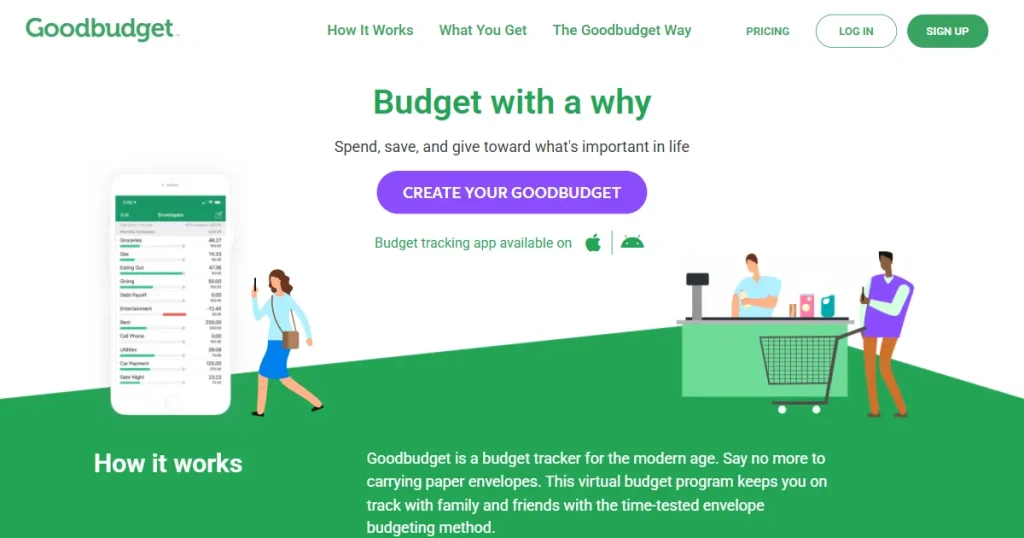
Your app landing page should be optimized with relevant keywords, descriptive URLs, title tags, meta descriptions, image alt text, and a clear site structure. These factors help search engines understand your content, improve crawlability, and increase your chances of ranking for relevant search queries.
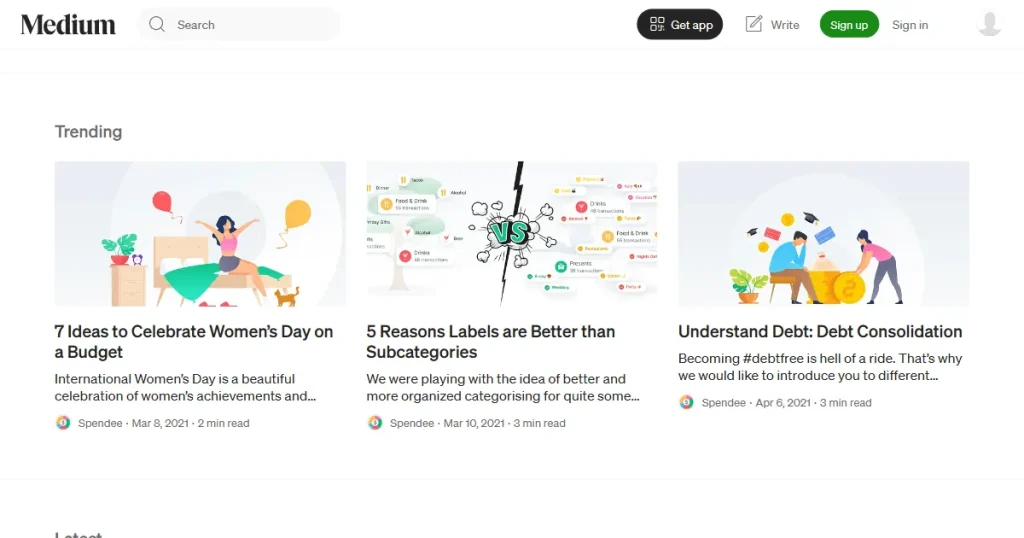
Content Marketing by writing detailed guides and articles is one of the fastest ways to get organic traffic for your app on search engines.
Thus, invest time in learning how to write proper SEO articles and publish them on free platforms like Medium and Blogger to increase your website traffic and improve the chances of your app being discovered.
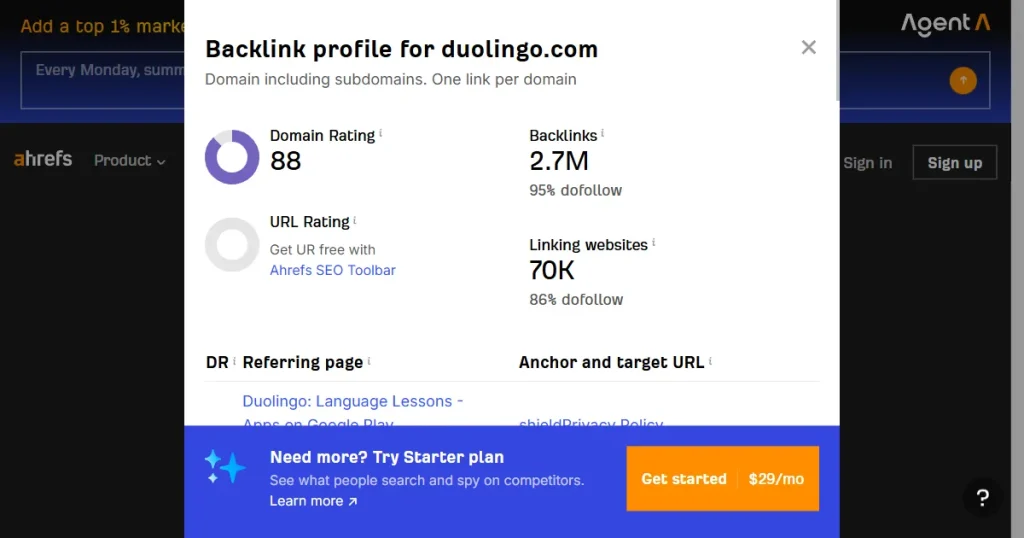
Another major trust booster with search engines is having good backlinks. To improve your backlinks, you can guest post on other people’s blogs, publish data-driven content that others can cite, and build relationships with bloggers to naturally include your app in their content, increasing the likelihood of your app being discovered organically.
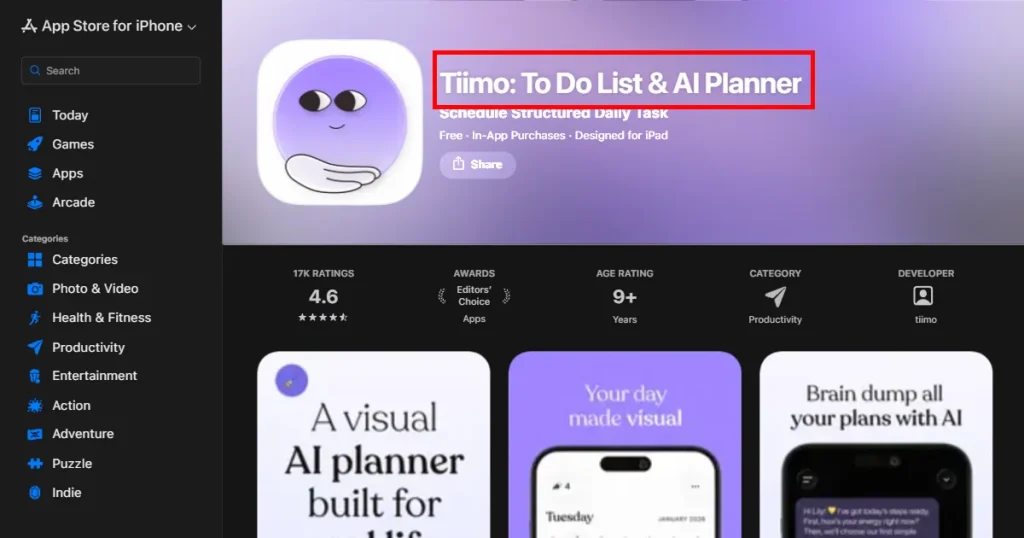
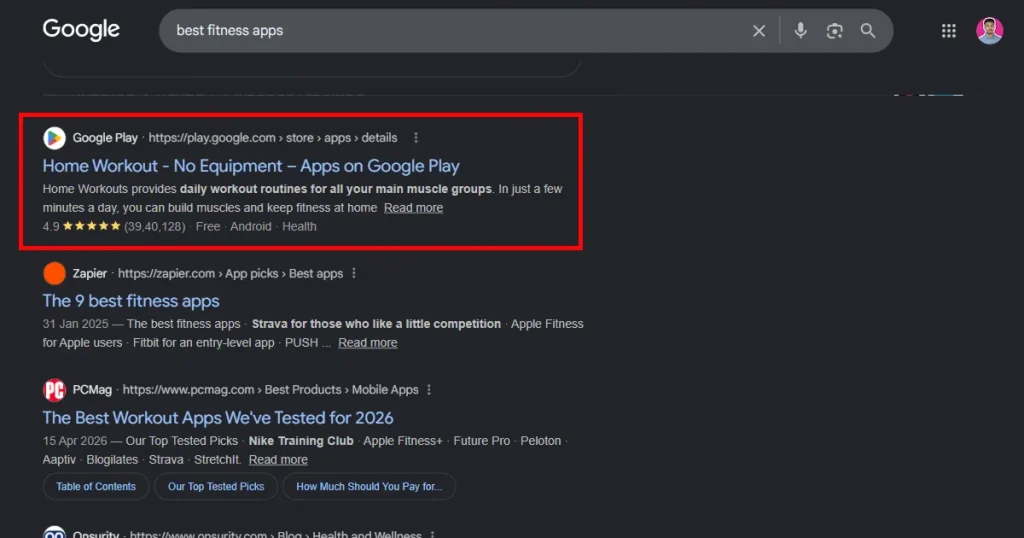
Google also ranks your App Store and Play Store page, which means you might be able to rank on Google search without even a website or doing content marketing.
All you have to do is optimize your title, description, screenshots, and encourage positive reviews for your app. So, Google can see you as a high authority and ranks your app store page higher than others.
This is where AppLaunchpad can make a difference. Since app store screenshots play a major role in both user engagement and conversion rates, AppLaunchpad helps app developers create optimized, professional app screenshots that make their app listing more appealing, improving the overall effectiveness of their app SEO and organic user acquisition efforts.
The best mobile app SEO tools help you measure, optimize, and scale your app’s organic growth. Below are a few mobile app SEO tools that will help you optimize your app for more organic discoverability.
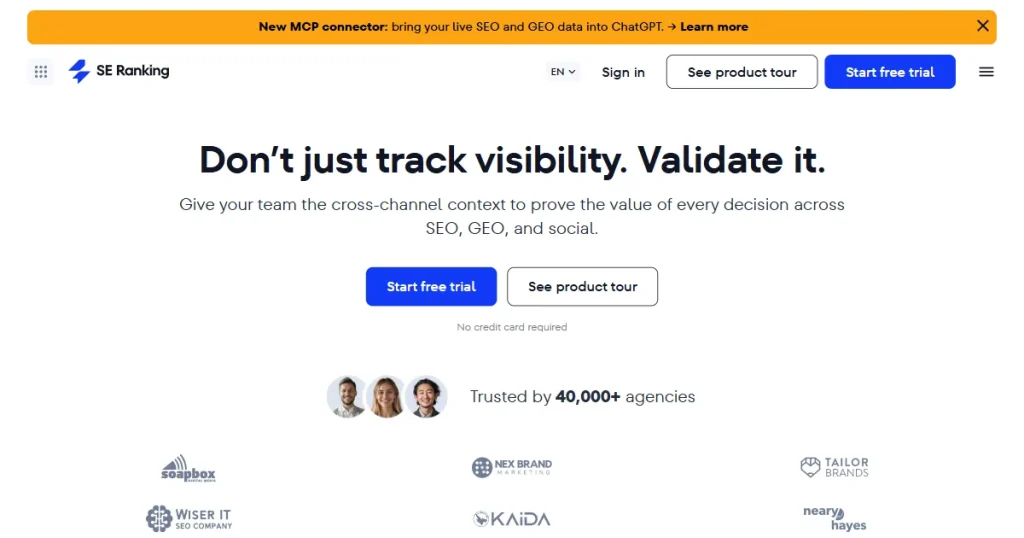
SE Ranking is an SEO platform that allows you to find keywords and analyze competitors for app SEO optimization. Apart from SEO, the platform has expanded its scope to GEO, allowing you to track which keywords you are ranking for in Chatbots and optimize your website accordingly.
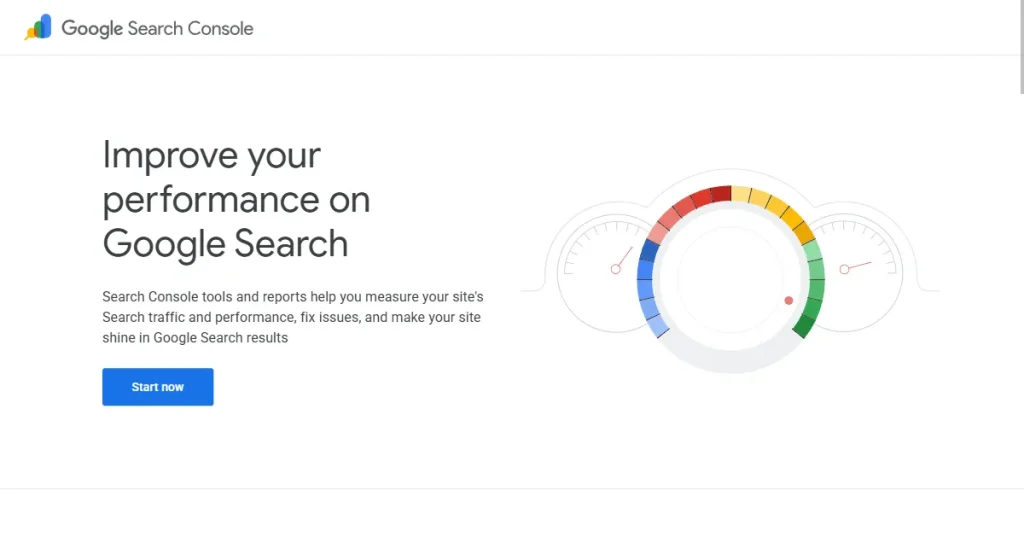
Google Search Console becomes one of the most important tools for App SEO optimization once your websites start getting some traction. With the help of Google Search Console, you can find information about impressions, clicks, on-page time, and bounce rate of your website.
This allows you to see which topics drive the most traffic to your website, check whether your important pages are indexed correctly, and identify any crawl issues with your website. So, you can fix them and improve your Google ranking.
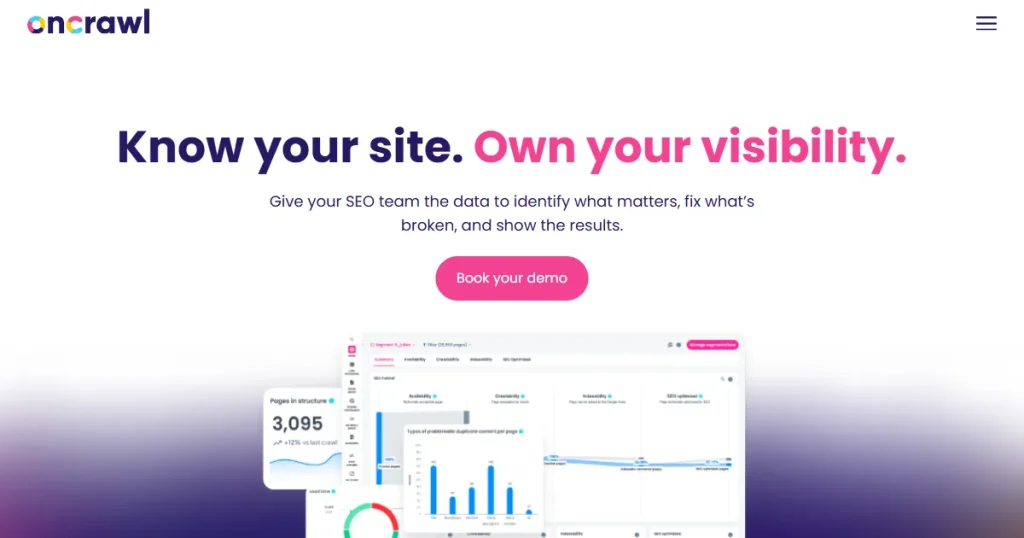
Oncrawl is a technical SEO and website crawling tool. Its purpose is to see how a website communicates with a search engine. It crawls your website pages, analyzes your site structure, internal links, crawlability, and indexability, to help you find Technical SEO issues that can be hard to spot manually.
Oncrawl is particularly useful for App SEO if your website has tons of pages, including landing pages, comparison pages with different apps, and blog articles, as it can help you identify technical issues fast and rank your page much higher.
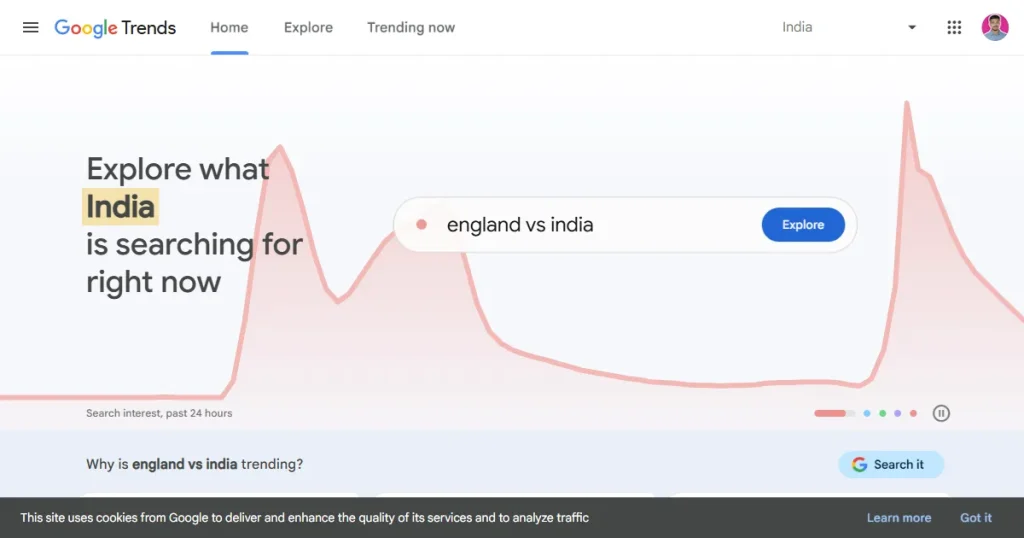
Google Trends is also an excellent tool for App SEO, as it lets you see trending search topics and keywords, and validate content ideas before you start working on them. By using Google Trends effectively, you can target new keywords and optimize your page to rank for them before your competitors do.
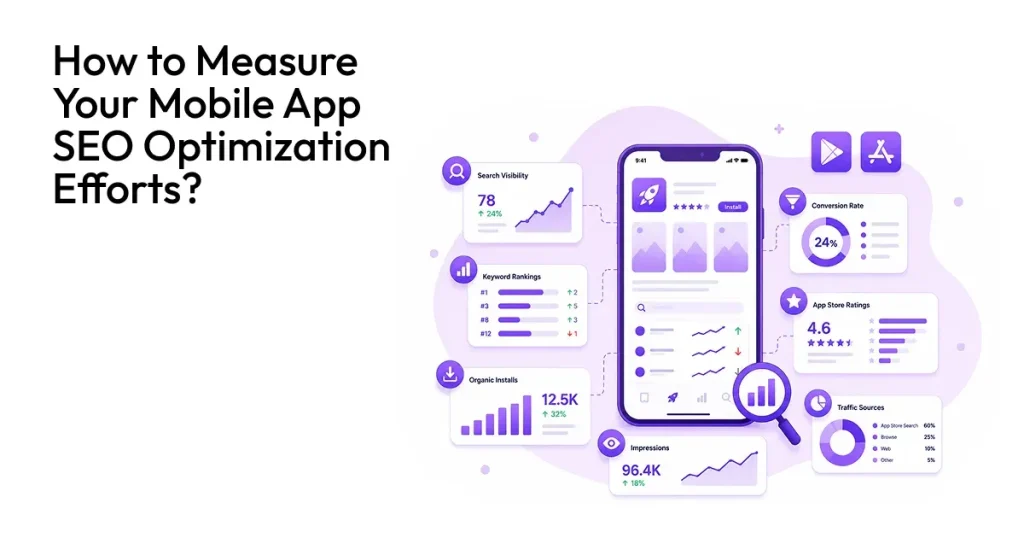
Now that you have learned about how to do SEO for Apps, the best Mobile App SEO tools, let’s look at how you can measure if your Mobile App SEO optimization is giving you the right results or not.
Track your organic traffic regularly, as it is the most important factor that shows your SEO efforts are working. Over time, your organic traffic should increase if not, you’re targeting the wrong keyword or audience, and you need to change that.
Also, keep tracking the keywords your pages are ranking with the help of proper ASO tools to see if there are new opportunities to target and rank for.
CTR is another important metric that shows people are taking the right action you want them to take. For example, you have optimized your web page to redirect people to your app store. If you are not achieving that goal, you’re doing it wrong.
High traffic might not naturally lead to more downloads, if that is the case, then you need to optimize your app store page too. So keep track of your conversion rate as well, so you can analyze which elements can be improved.
Bounce rate is the number of people leaving your site after visiting just one page. This shows that your website isn’t compelling enough to keep people. Additionally, track time on site and pages per session to gain insight into whether visitors are intrigued and staying on your page, or if you need to make changes.
While traditional search engines remain important, AI platforms like ChatGPT and Claude are becoming a growing source of discovery. Optimizing for AI search engines is called Generative Engine Optimization (GEO).
AI-generated search results usually feature only a few trusted sources, giving more visibility to brands that publish clear, authoritative content. If your app appears in these responses, it can increase brand awareness, build trust with users, and drive attention even without a website click.
To improve visibility in AI-driven search results, create content with clear headings, concise explanations, and well-defined product descriptions. Strengthen your app’s presence by getting featured on trusted and relevant websites, while combining ASO, SEO, and GEO into a single app discovery strategy.
Here are a few common mistakes you need to avoid when doing App SEO to make sure your App SEO optimization efforts don’t go to waste.
App Store Optimization focuses on ranking your app in the App Stores and increasing downloads, while Search Engine Optimization helps your app be discovered even before someone searches for it.
This increases the likelihood of your app being discovered, attracts users earlier in their decision-making journey, and creates an additional source of organic traffic beyond the app stores.
You can do App SEO by optimizing your app store listing, landing pages, and website content for relevant keywords.
Yes, SEO works for apps by improving their visibility on search engines and driving more organic installs if you follow the right mobile App SEO optimization practices.
Yes, SEO applies to mobile apps too, as you can optimize your app store listing, website pages, blogs, and landing pages for relevant keywords to increase your app’s discoverability.
Some of the best mobile app SEO tools for beginners include Google Search Console, SE Ranking, Oncrawl, and Google Trends. These tools can help you find the right keywords, optimize your website, and stay up to date with trending keywords.
SEO for Apps usually takes several weeks to several months to show noticeable results, depending on the competition and the quality of the optimization.
App SEO rankings are affected by keywords, backlinks, app ratings, metadata quality, page speed, and user engagement signals. If you use the right Mobile App SEO tools and do proper App SEO optimization, you will increase the chances of your app being discovered.
App SEO optimization can improve App Store rankings by increasing visibility, relevance, and user engagement across search and app discovery platforms.