
Top 10 AI App Builders In 2026
Discover the top 10 AI app builders in 2026. Learn what each tool does, pricing, pitfalls, and which platform fits your startup or MVP best.
Emergent AI is an AI-powered mobile and web application builder that allows you to create fully functional software by describing what you want in plain language. The platform can generate front-end interfaces, back-end logic, databases, and handle deployment, without manually writing code.
However, as good as Emergent AI app builder is at full-stack application development, it still has some limitations. Its credit-based pricing and platform instability can make you question whether it’s actually worth investing.
Which is why we decided to roll up our sleeves to find out just that. This Emergent AI review is a straightforward look at the AI app builder, covering its key features, strengths and weaknesses, user reviews, and comparing it with some of the best Emergent AI alternatives.
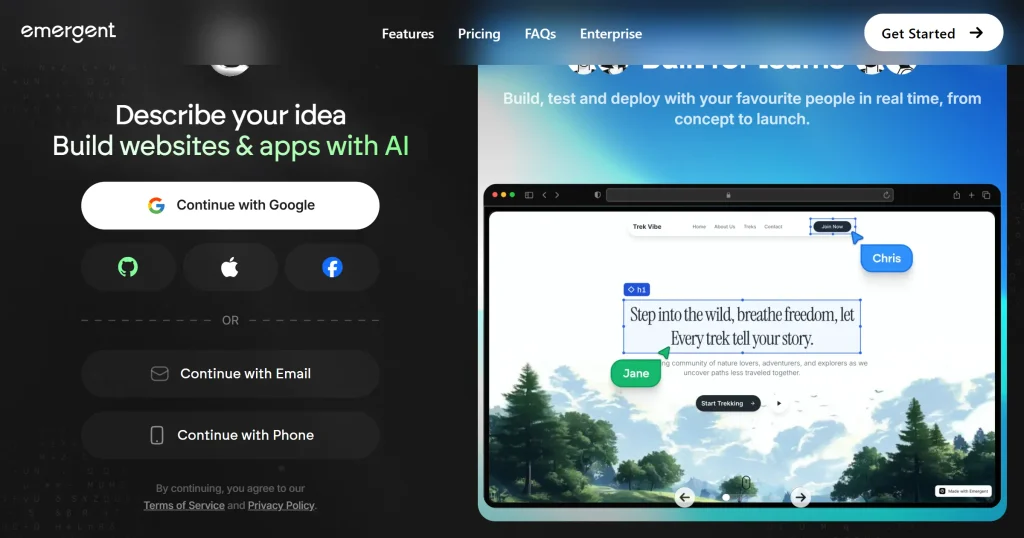
As mentioned earlier, Emergent AI is an AI-powered application builder that turns text descriptions into a working web and mobile application. Developed by Emergent Labs, the AI app builder uses multiple AI agents to handle architecture, coding, testing, and deployment, doing much of the development process for you.
This makes Emergent app builder particularly useful for product founders, entrepreneurs, product managers, and non-technical users who want to test a product idea or want a quick prototype without first hiring a development team.
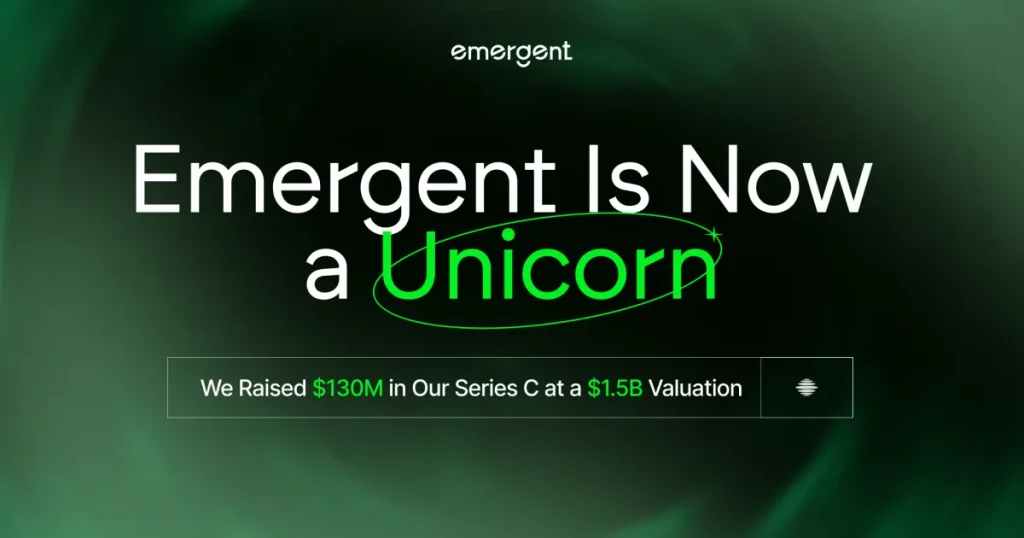
Founded in 2024, Emergent AI app builder has grown unusually quickly. The company reached a whopping $100 million in annual revenue within eight months of its public launch.
By July 2026, Emergent AI reached an annualized revenue run rate (ARR) of $130 million, valuing the company at $1.5 billion and achieving unicorn status. The company has planned to execute several scaling plans within the next 12 to 15 months.
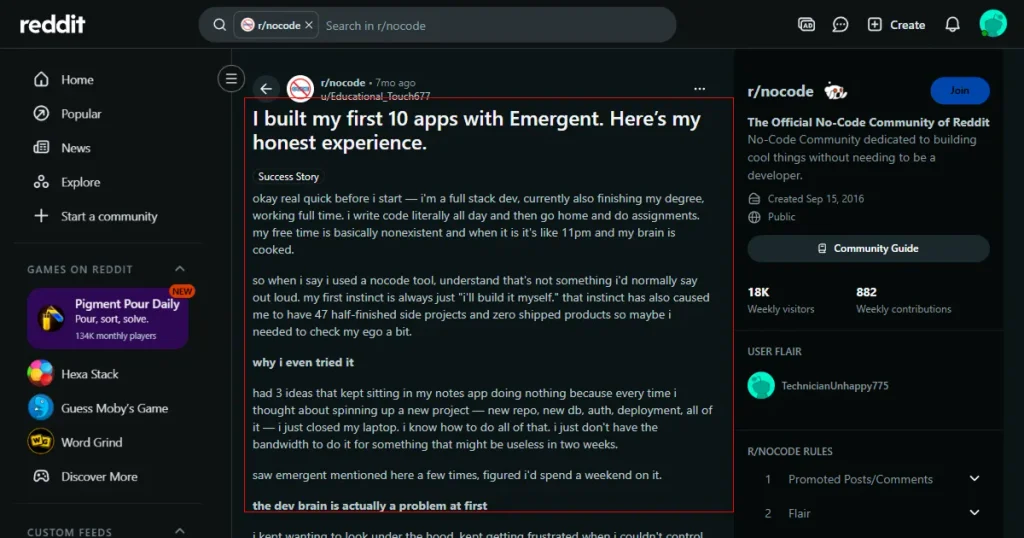
This Emergent AI review is not complete without looking at feedback from real users. And Reddit is a great place to see what people are actually saying about the AI app builder.
Looking at the Emergent AI review, the feedback on Reddit is mixed. One user described building 10 apps with Emergent AI, and the biggest benefit the user found was speed. But the same user also pointed out that they struggled with complex functionality and also had some reliability and control issues.
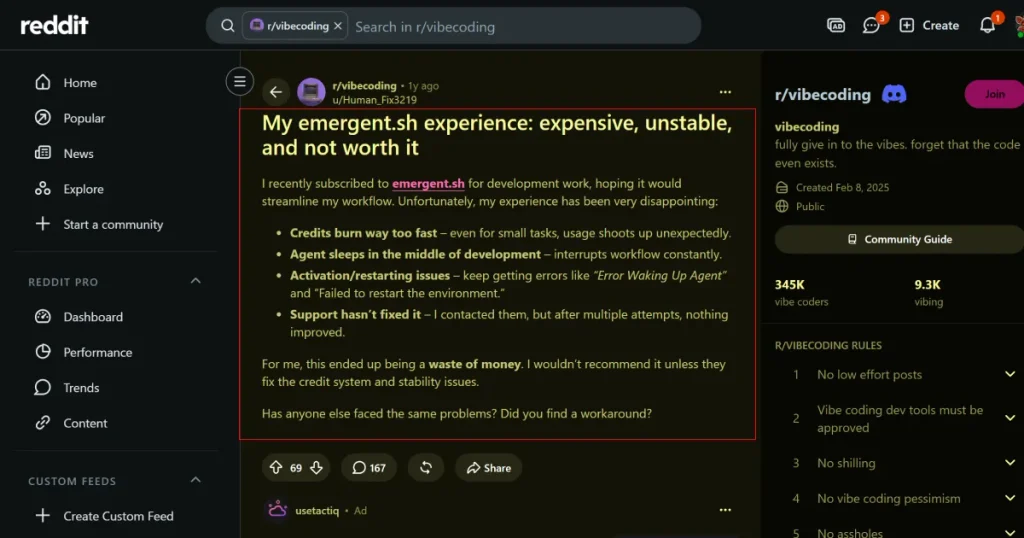
Another Reddit user had almost the opposite experience. They complained about credits being consumed quickly and kept getting errors like “Error Waking Up Agent” and “Failed to restart the environment,” during development. The user mentioned contacting support multiple times, but the issue didn’t get resolved.
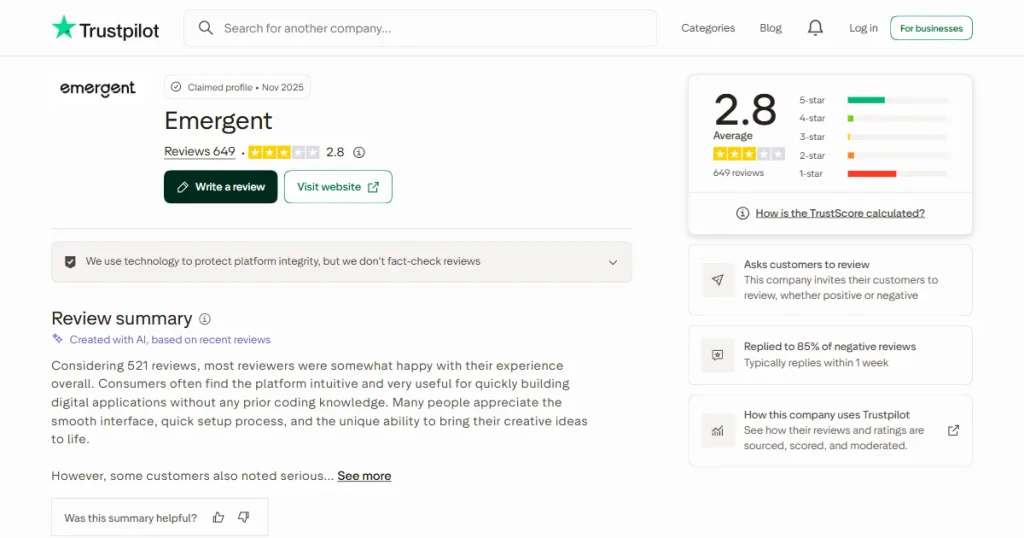
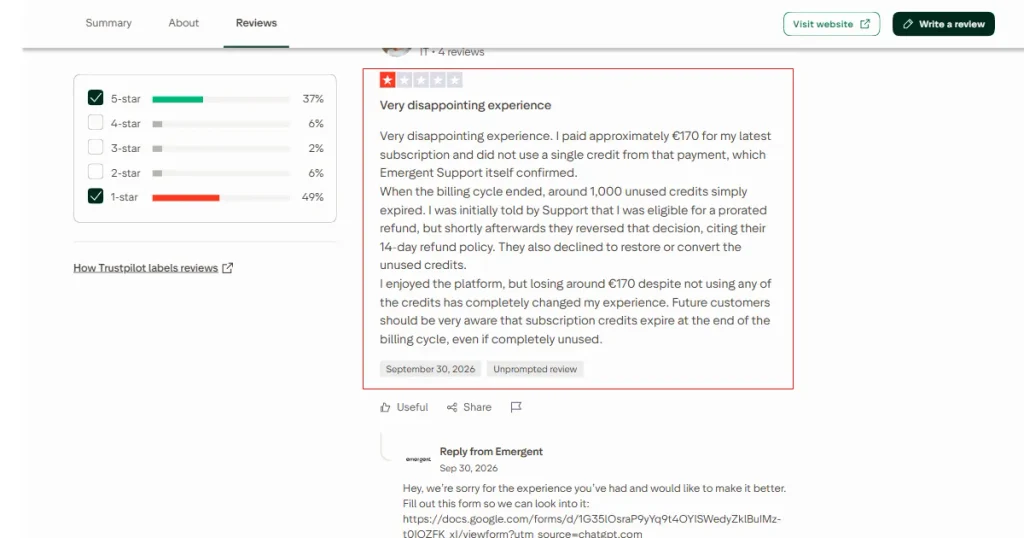
The Emergent AI review on Trustpilot is also mixed. Although the rating stands at 2.8/5 from 638 reviews, positive reviews commonly praised its ease of use and speed, with one particular user calling it “very simple and easy to use.”
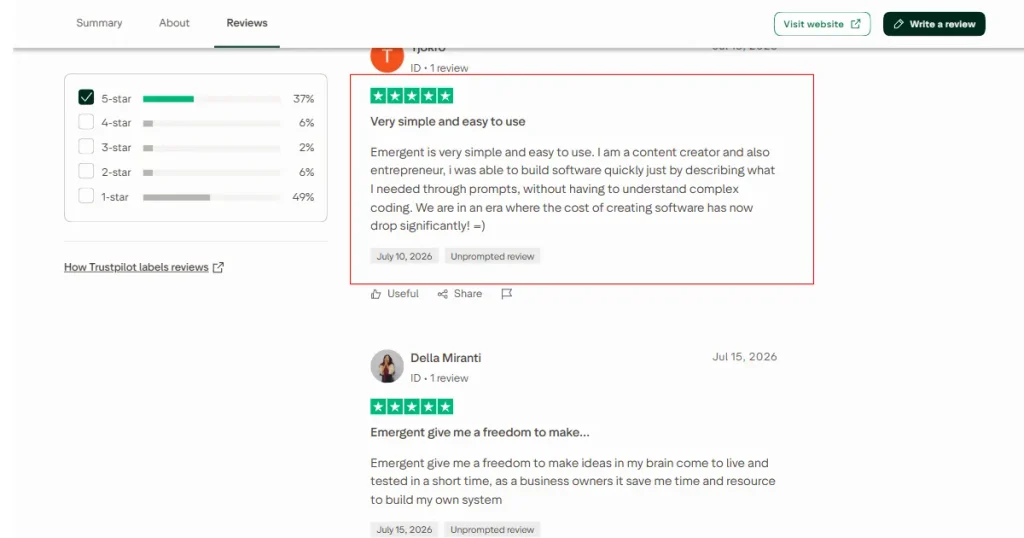
Negative reviews, on the other hand, mention credit consumption, technical errors, incomplete applications, and support problems as the biggest issues.
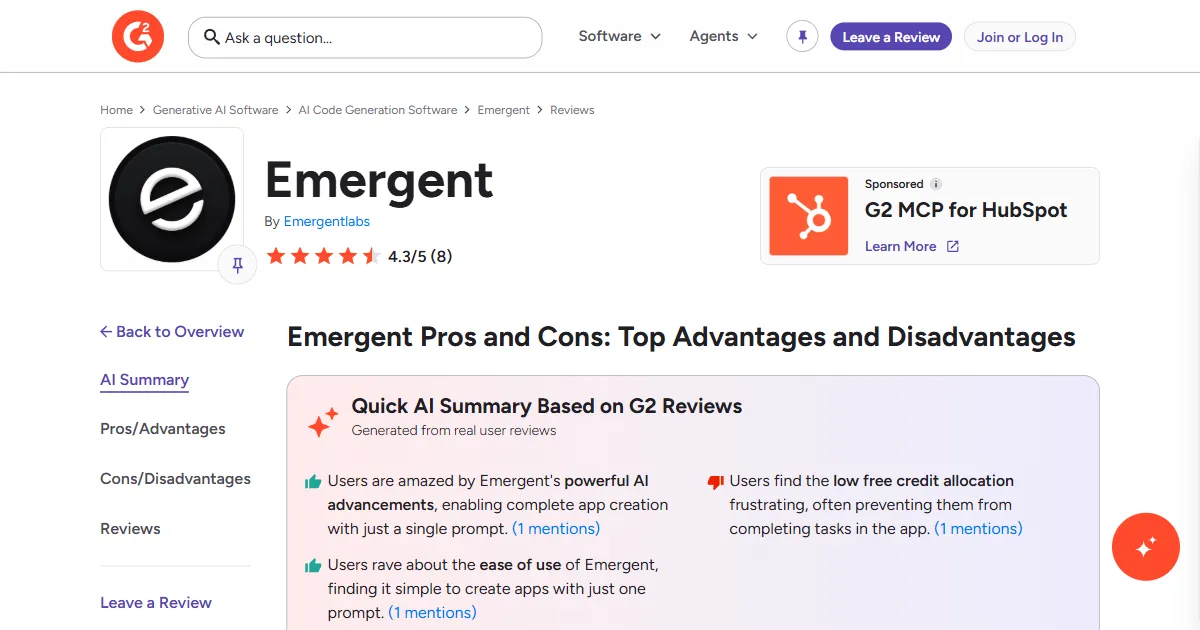
Emergent AI reviews on G2 are more positive, with the current rating standing at 4.3/5. Users mainly praise its ease of use and fast MVP development, without coding. But some reviewers also mentioned low latency and high credit burn.
Below are some Emergent AI reviews from real users on G2.

Emergent AI app builder supports several types of applications, and below are the products you can build with the tool.
Below are the core Emergent AI features we personally tested for this Emergent AI review.
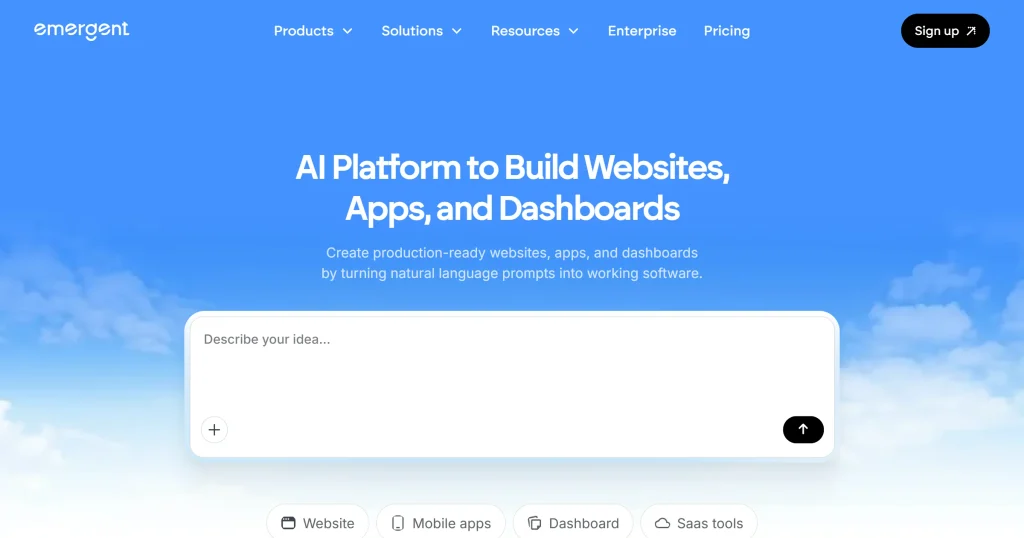
Emergent AI’s prompt-based app generation is very simple and easy to use. You can describe your idea in plain language instead of writing the code yourself. You can enter text prompts, use voice input, or even upload reference files and designs.
Once the first version is created, you can keep prompting Emergent to change the design, add features, or fix problems. This makes Emergent app builder accessible to beginners.
Full-stack development means creating the frontend, backend, database, APIs, and application logic required to make an app functional, and Emergent AI offers just that.
The platform uses technologies such as React and JavaScript/TypeScript for the frontend, while backend services handle data and application logic. You can create user accounts, forms, dashboards, data storage, and workflows without manually configuring every technical component.
However, complex functionality requires additional prompts, testing, and debugging before publishing to the App Store or Play Store.
Emergent AI app builder uses multiple AI agents for different app development tasks, including planning, coding, testing, and debugging. It also uses different AI models, such as GPT and Claude, to generate content, depending on what your project is about.
The advantage is that larger tasks can be broken into different development steps, delivering better results. But the downside is that more agent activity can mean higher credit consumption.
The backend and database needed to store and process application data are set up by Emergent AI itself. It uses MongoDB for data storage and Python with FastAPI for backend services. Which means you can create records, APIs, workflows, and application logic simply through prompts.
But you should still test major database changes carefully because modifying one part of an application can affect existing features.
Authentication is not automatically included in every new project, but you can ask Emergent AI to add it using the chat interface. Depending on your setup, you can use email and password, Google sign-in, or magic links. Additionally, external services such as Supabase Auth can also be connected.
When you consider Emergent AI review, integrations with external services and APIs are important factors to consider. You can connect AI services such as OpenAI, Anthropic, and Google Gemini to the platform, as well as payment services such as Stripe.
Most setup can be handled through prompts, but you still need to provide the required API keys or account credentials.
Once you’re done creating your application, you can access the generated code and ask Emergent AI to change the layout, styling, functionality, or features. You can also export the code and continue development outside the platform. GitHub integration is useful when you need version control or want to work with developers.
Emergent AI includes AI-powered debugging tools that can inspect errors and suggest or apply fixes to your generated projects. However, you can also provide error messages, logs, and screenshots to help the AI identify problems. Its debugging tools can also investigate API issues such as 404 errors, 401 authentication errors, and CORS problems.
Emergent app builder includes built-in deployment and hosting. Once the application is ready, it can build and deploy the project and provide a live URL, with deployment typically taking around 5-15 minutes.
Its deployment service uses Kubernetes-backed environments. Deployment can be easy and fast, but always test the live application before releasing it to users.
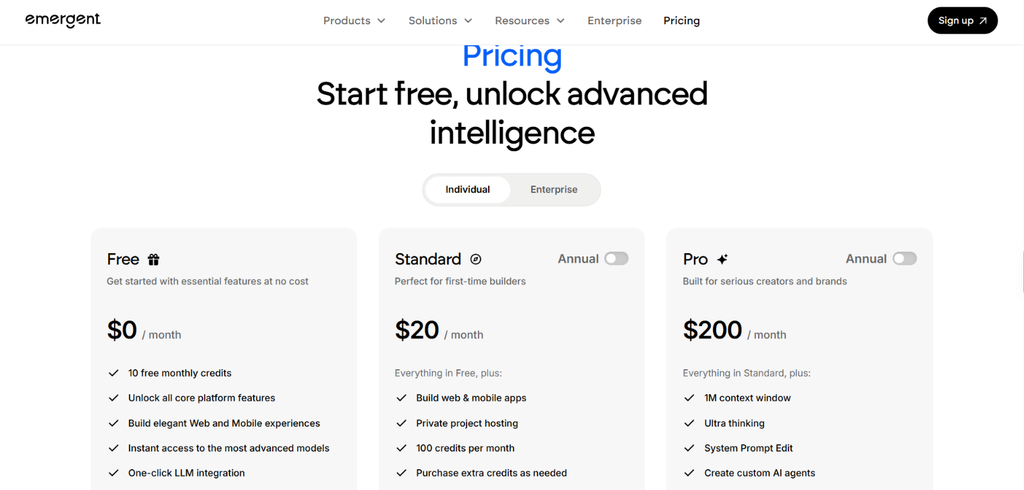
Emergent AI offers several plans based on what you want to build and how many credits you need.
How to Get Extra Credits?
You can also purchase additional credits when your monthly credits run out. Just log in to Emergent AI, go to Account Settings, and click Buy Credits at the top of the interface. The top-up bundle ranges from $1 to $1,000, providing approximately 5 to 6,000 credits.
Below are the pros and cons of Emergent AI.
Follow these steps to learn how to use the Emergent AI app builder.
Step 1: Enter your prompt
Describe what you want to build. You can also use voice input or upload a design reference, and
select whether you want to build a web app or mobile app.
Step 2: Answer the follow-up questions
Emergent asks about your users, accounts, roles, and other project details before generating the app.
Step 4: Review the first preview
Wait for the initial preview, which Emergent estimates will take around 5 to 10 minutes. Test the core interface and features.
Step 5: Make changes with prompts
Tell Emergent what you want to change directly from the preview and make smaller, more precise edits.
Step 6: Push your code to GitHub
Send your project to GitHub to keep a copy, work with developers, or continue building outside Emergent.
Working this way can also help control credit usage because you are making smaller, more targeted changes.
As part of this Emergent AI review, let’s see how it compares with the alternatives.
| If your priority is… | I’d consider |
| Fast full-stack app development | Emergent AI |
| Building an MVP without coding | Emergent AI / Lovable |
| Rapidly testing app ideas | Emergent AI |
| Better visual editing and UI control | Lovable |
| More control over generated code | Cursor / Replit |
| Simple business applications | Base44 |
| Affordable MVP building | Emergent Ai / Replit |
| Free plan for testing | Emergent AI / Lovable / Replit |
That concludes our Emergent AI review. To put it simply, Emergent AI app builder is a strong option if your main goal is to turn an idea into a working mobile application quickly. Its ability to generate the frontend, backend, database, and application logic makes it more useful than any other AI app builder.
However, the credit system is the main drawback. If your application needs many iterations or repeated debugging, your subscription may not be your final cost. On top of that, you might face development issues for which you need to have basic coding knowledge to fix, and even review the generated app.
The best way to approach Emergent AI is not as a complete replacement for app development, but as a way to get from idea to working product much faster.
No, you don’t require coding knowledge to use Emergent AI app builder as it is designed to let beginners build apps using text prompts. However, some coding knowledge can help when debugging or working on complex features.
Some popular Emergent AI alternatives include Lovable, Replit, Bolt, and Base44. The best option depends on your app type, technical requirements, and budget.
Yes, Emergent is free to use as it offers a free plan with limited credits, allowing you to try its app-building features. Paid plans provide more credits and additional capabilities.
Yes, Emergent app builder is worth using in 2026 if your priority is quickly building and testing MVPs or functional applications without coding everything from scratch. However, its value depends on your project complexity and how efficiently you use your credits.
An Emergent AI review can help you understand its actual app-building capabilities, credit usage, pricing, limitations, and real-world performance before you commit to a plan.